A world of weirdness

I am not an art critic.  I have no ‘art’ credentials, some might say no taste either!  So a tour of the life and works of Salvidor Dali – visiting both his home in Port Lligat and his Theatre Museum in Figueres, was more perplexing than perhaps it might have been.

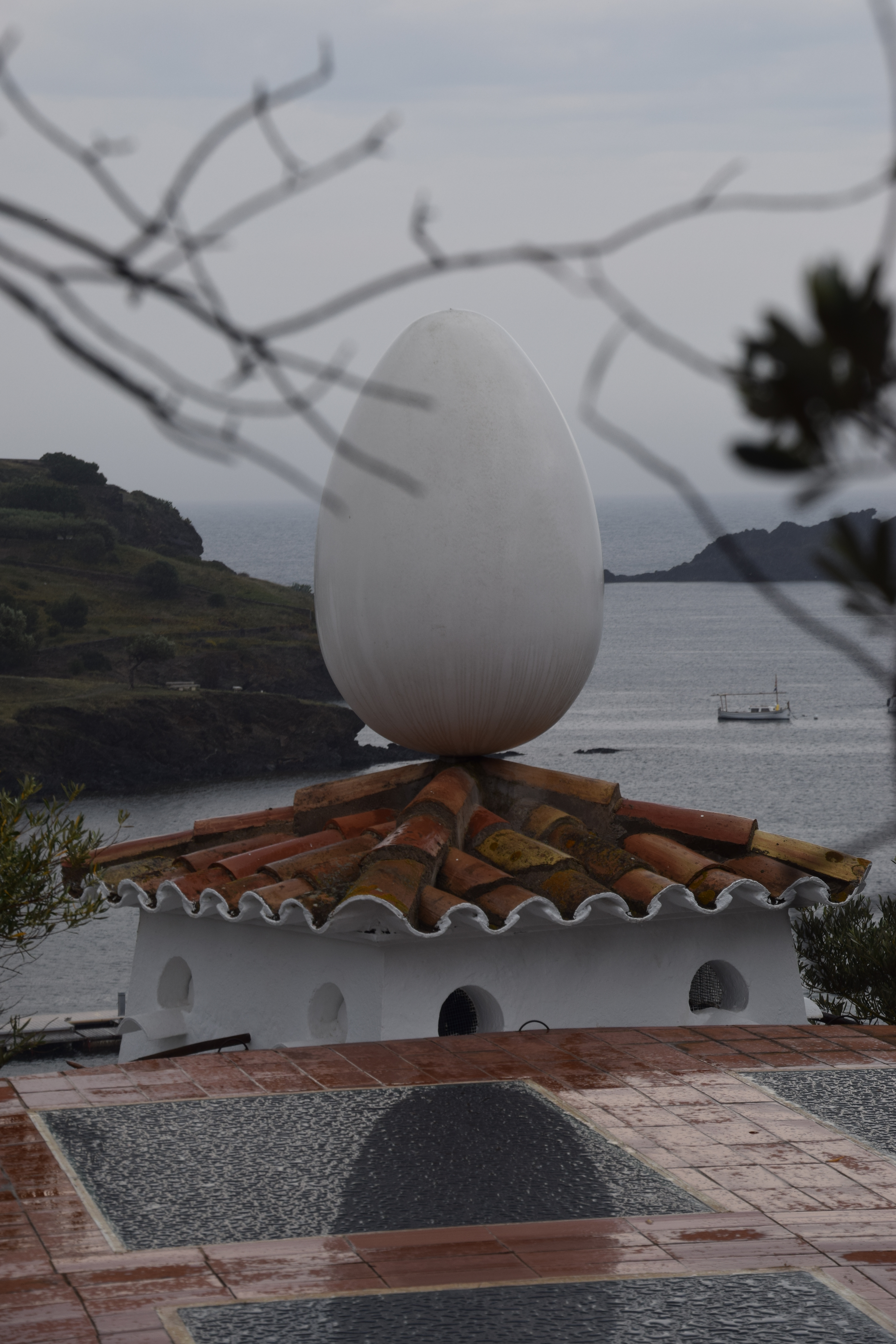
Of course, I have come across Dali before – his red lips sofa, his melting clock, his obsession with eggs and of course his ubiquitous moustache.

DSC_0263

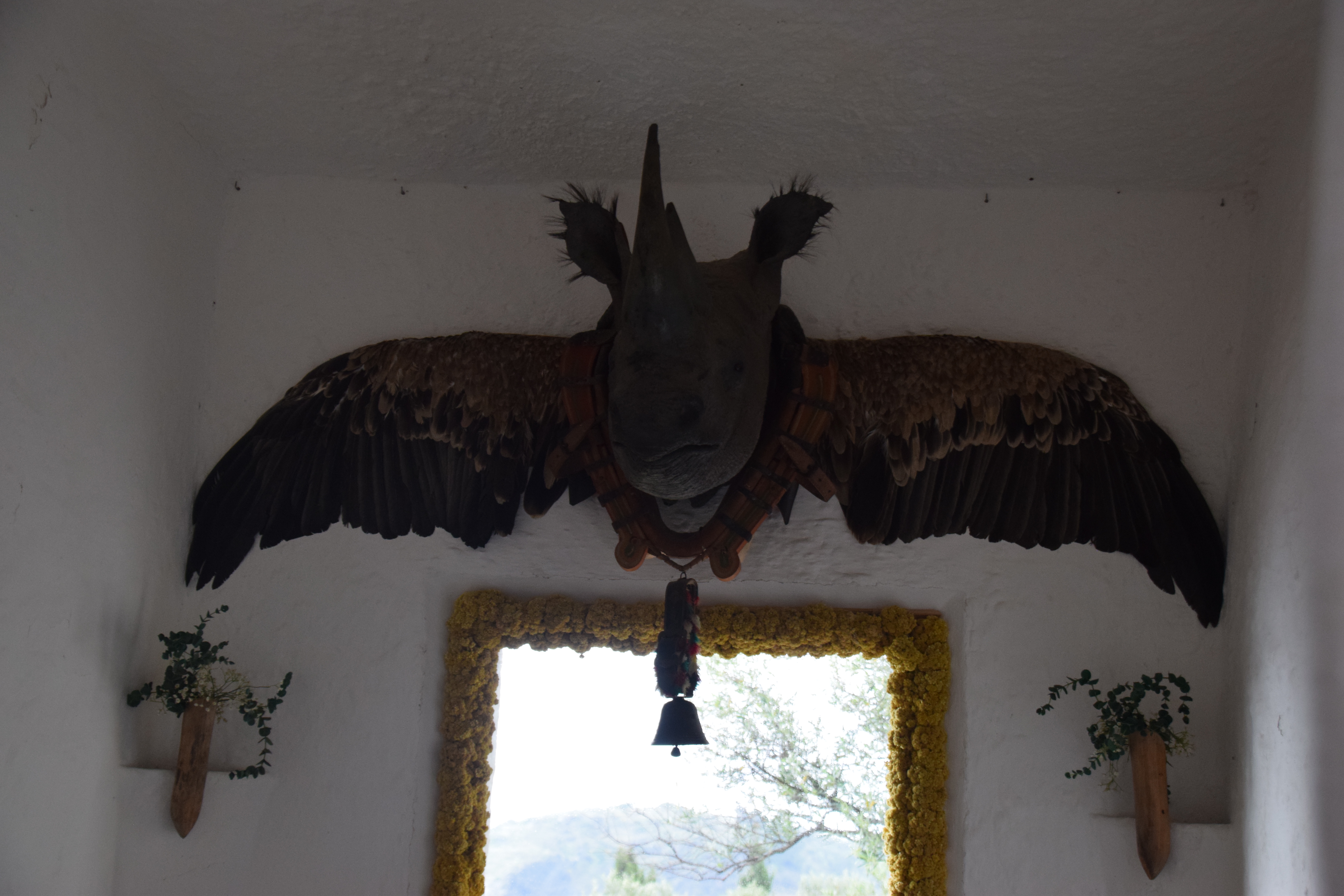
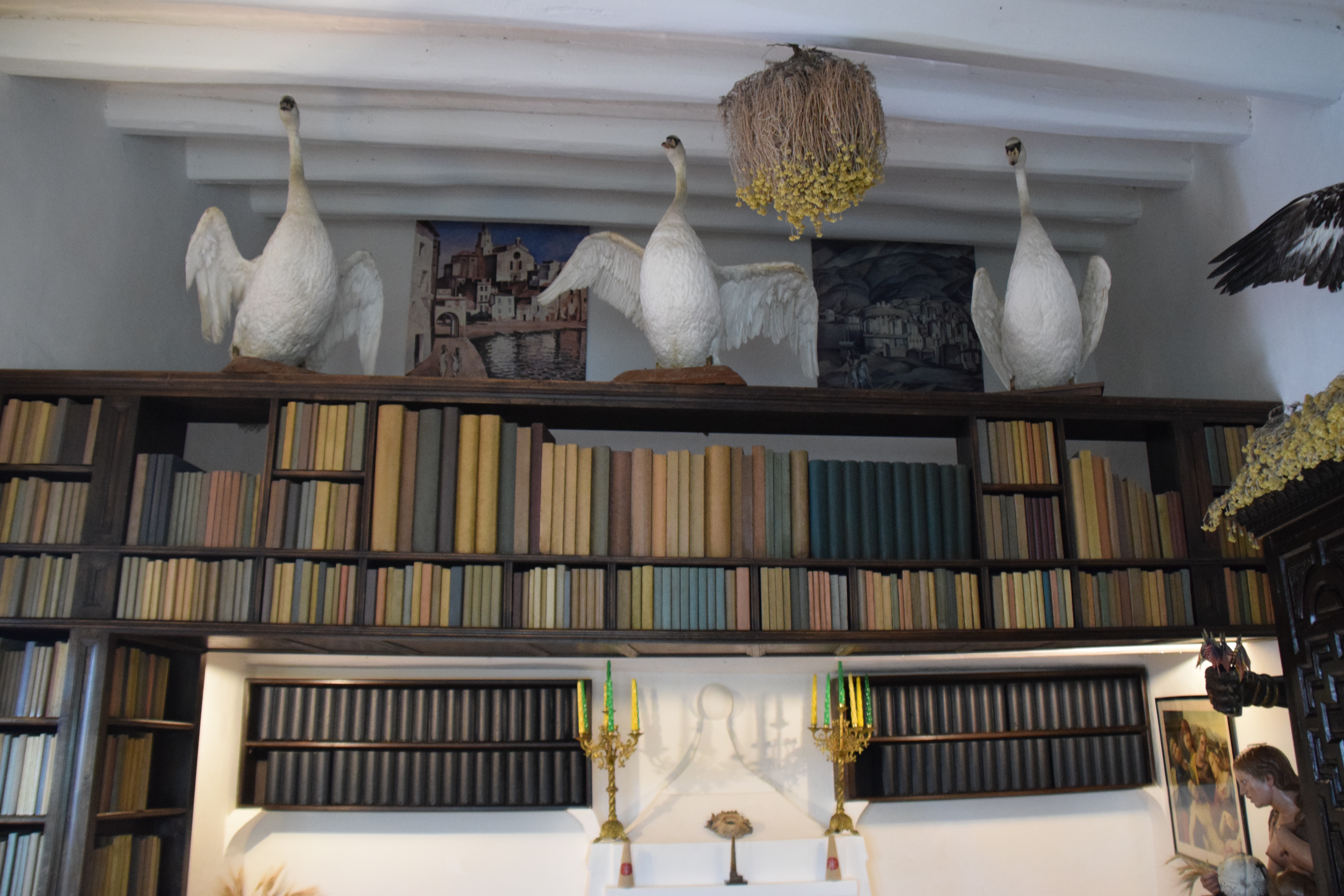
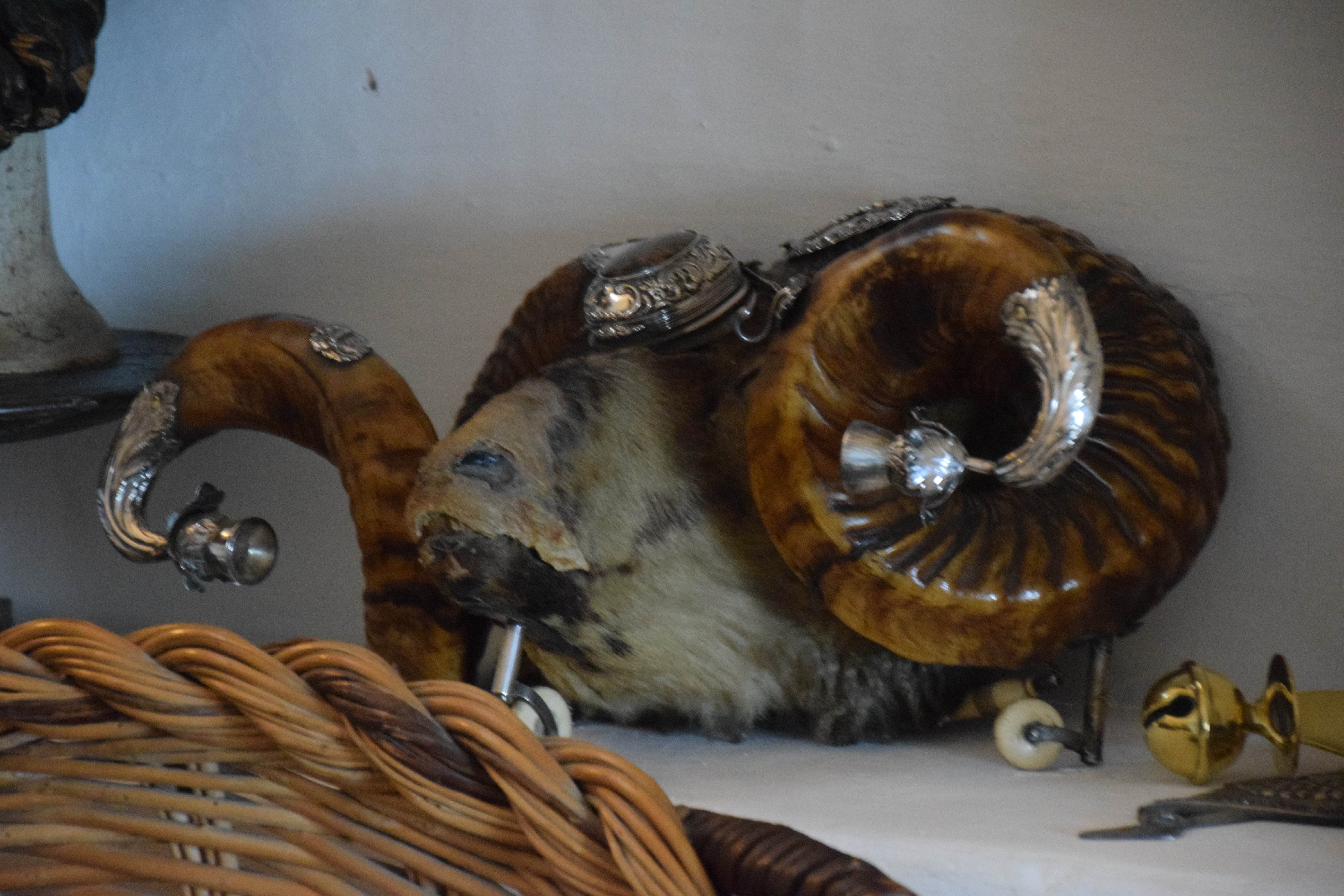
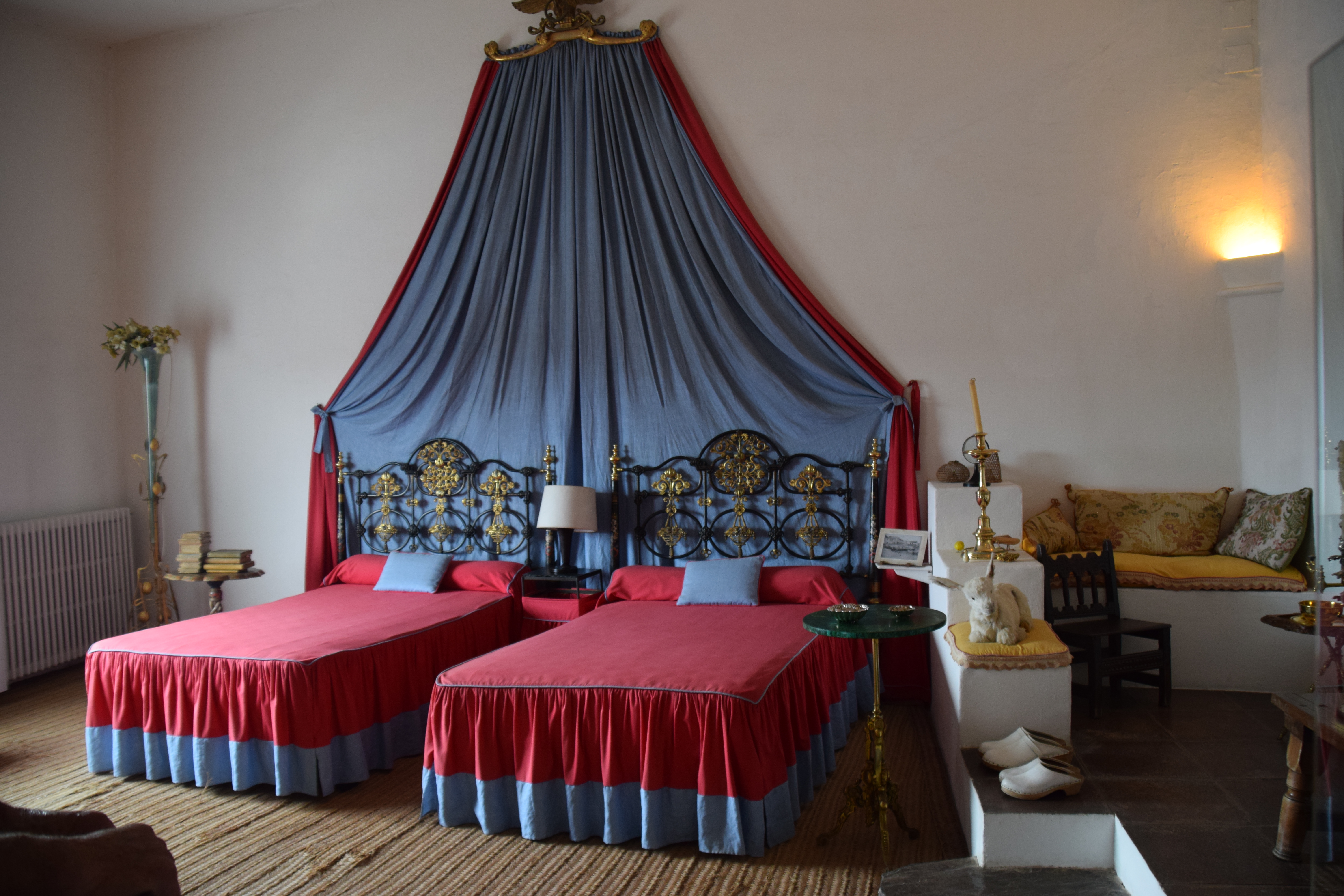
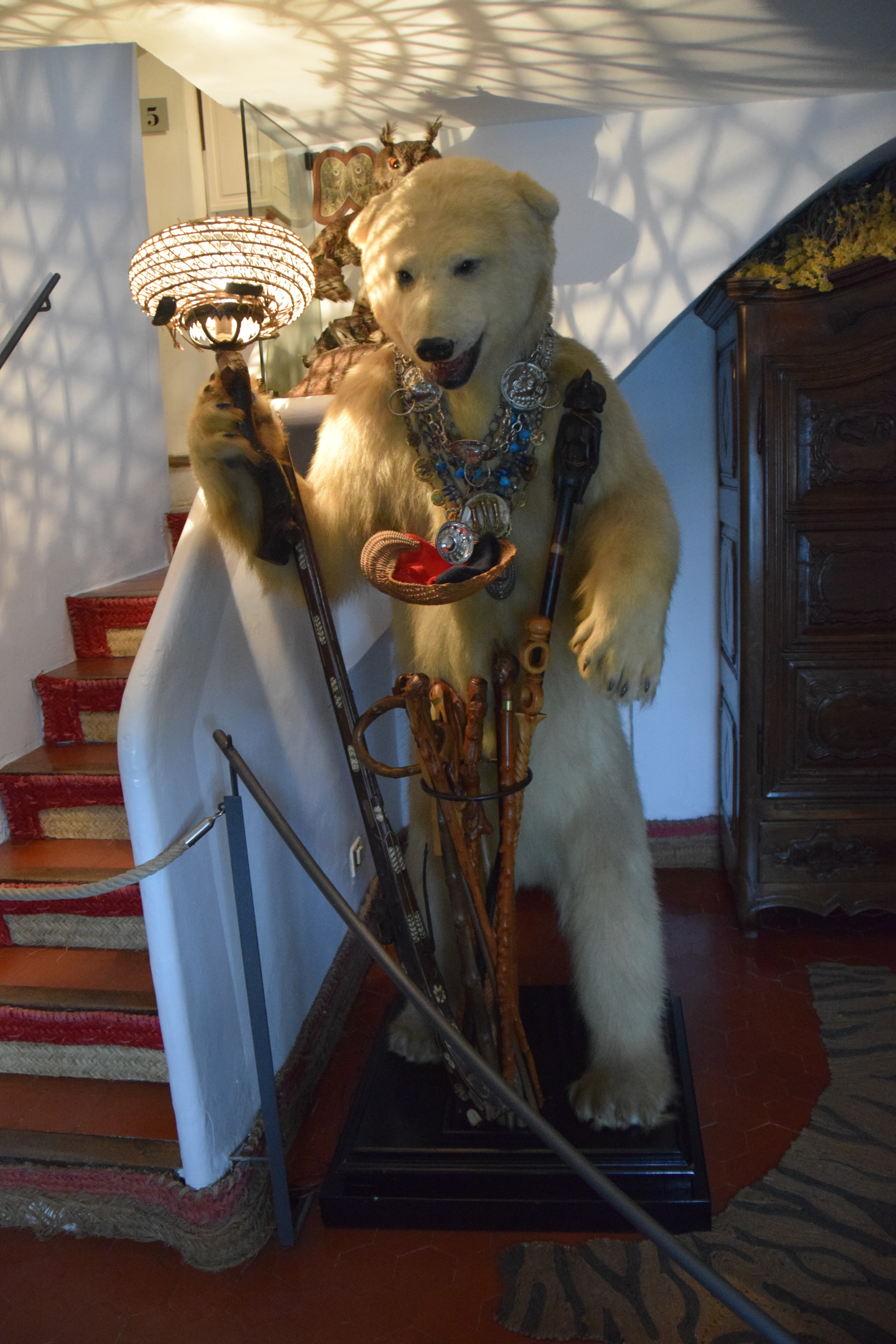
What I hadn’t appreciated was his obsession with stuffed animals – from the 3 swans that he used to feed on the beach, which on death were stuffed and displayed in his library, to the grotesque rhinoceros head set amid giant eagle wings, to the two kid goats in his bedroom and the jewellery adorned polar bear in his entrance hall….  I knew immediately this was a man I simply could not like!

DSC_0215 DSC_0238 DSC_0224 DSC_0217

The house would, in other circumstances (ie. with different less famous owners) have been condemned as a monument to knock-knackery in particularly bad taste.  Instead, people take what is a tortuously slow and windy drive on an unreasonably busy road to visit the house where tickets must be booked and paid for in advance, and collected no less than 20 minutes before your appointed tour time.  Each tour – at 20 minute intervals – is limited to just 8 people.  The ticketing system means that each group has to hang about in a place where there is nothing else to do, and precious little shelter from the rain that started falling on our arrival.  Perhaps I was not in the best state of mind to appreciate the brilliance of what for me was simply weird.  It felt like Dali had increasing been playing out a huge practical joke on his adoring public, pausing the boundaries of what they would accept as art simply because it had his name on it.

DSC_0233 DSC_0249

If not for the taxidermy, I might have shown more sympathetic interest in how this weirdness came about.  What sort of childhood did he have, why did he love flies so much he would honey the ends of his moustache to attract them?  And why did he love the sound of crickets – so much that had a Lille cage of crickets embedded in his bedroom wall?  But I really did care enough to find out.

DSC_0258

Two things did pique my interest… an oval room where, if you stand in the very centre and talk, you can’t hear anything other than your voice literally reverberating through your body (but no one else in the room can hear the echoes).  I thought it was fascinating and really wanted to know how it was done – who wouldn’t want a room where you can only hear the sound of your own voice?  Oh, wait, now I’m sounding weird.

The second useful idea was a mirror, carefully positioned in the bedroom so that he could lie in bed and see the sunrise …  I could do that at home, I thought.

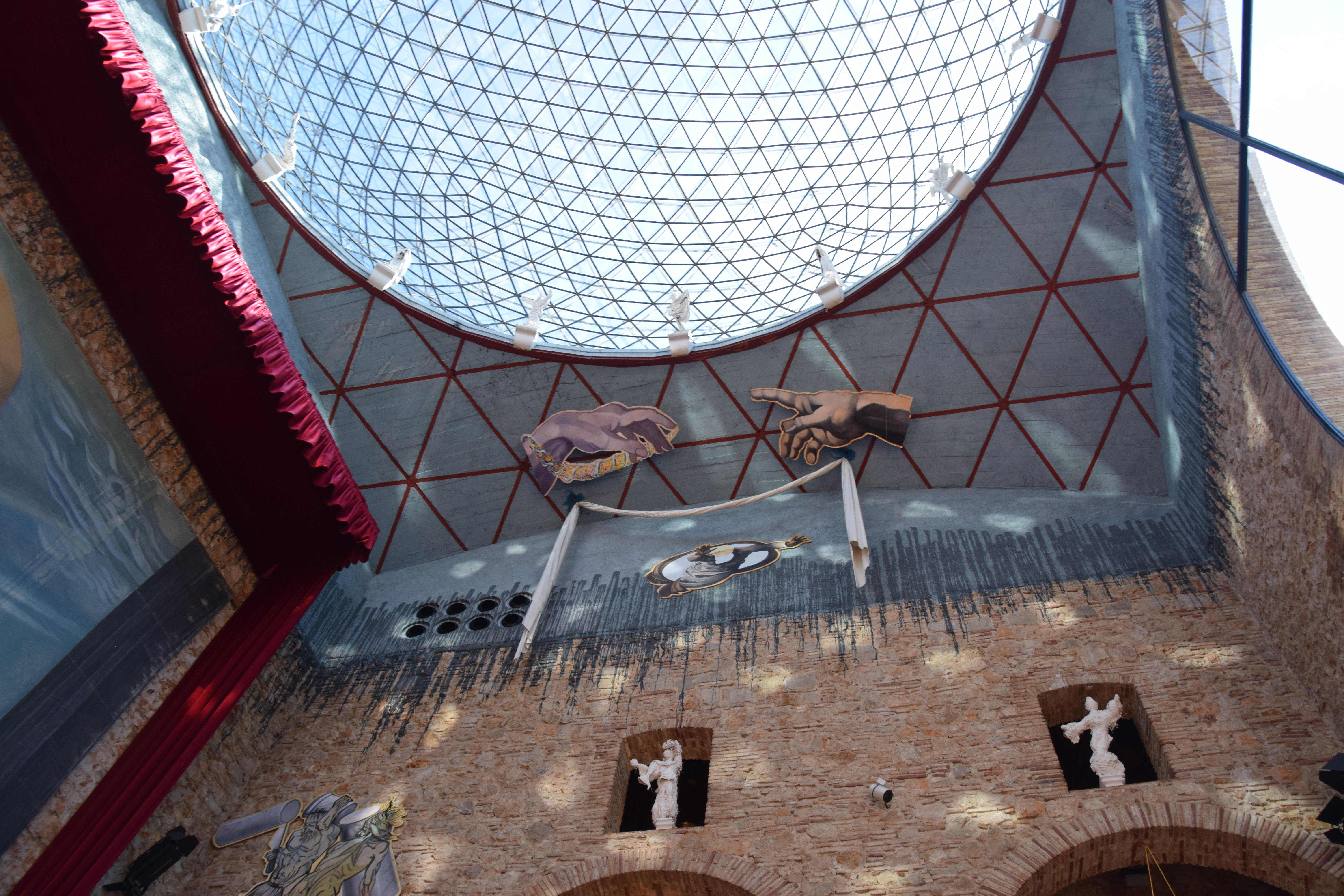
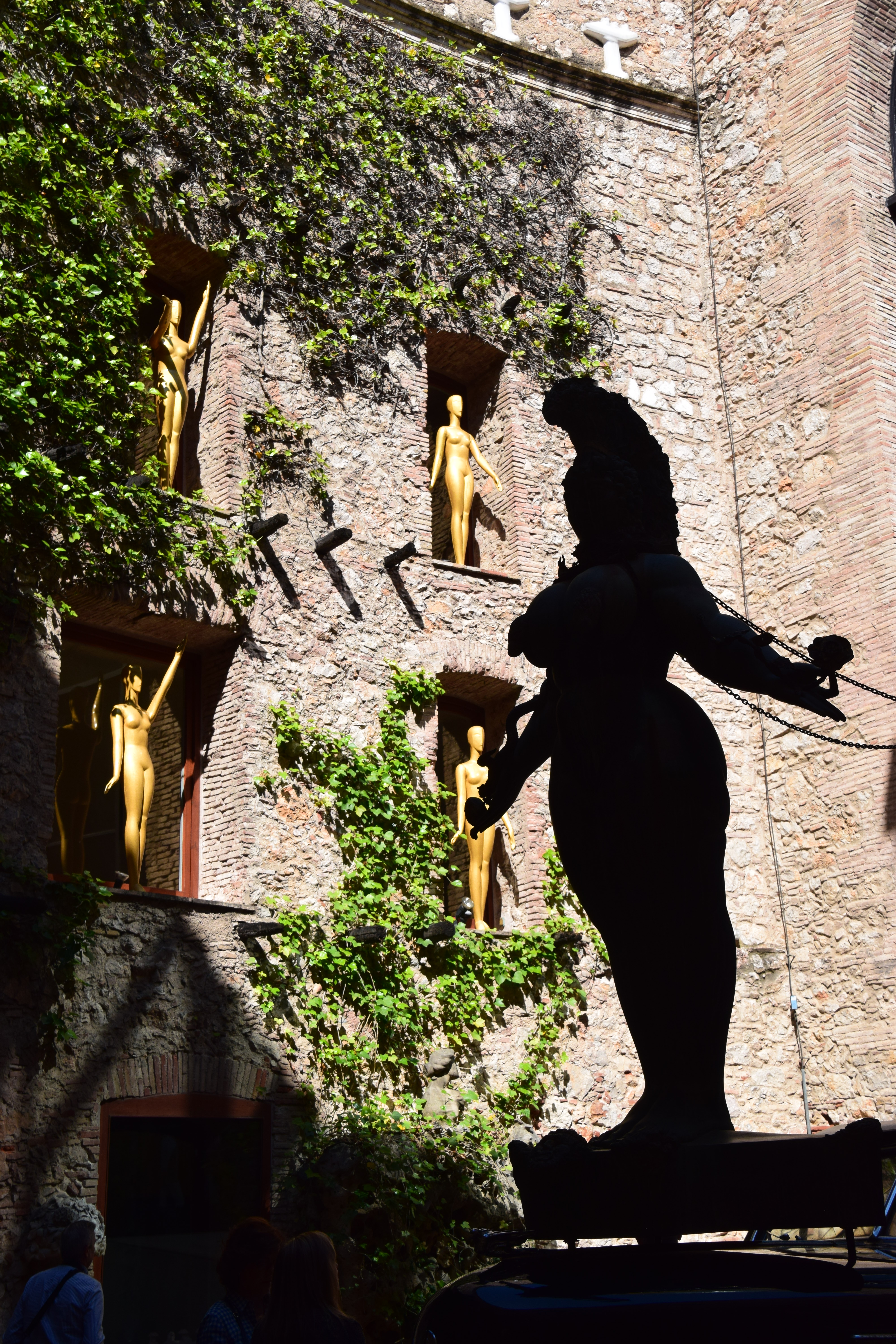
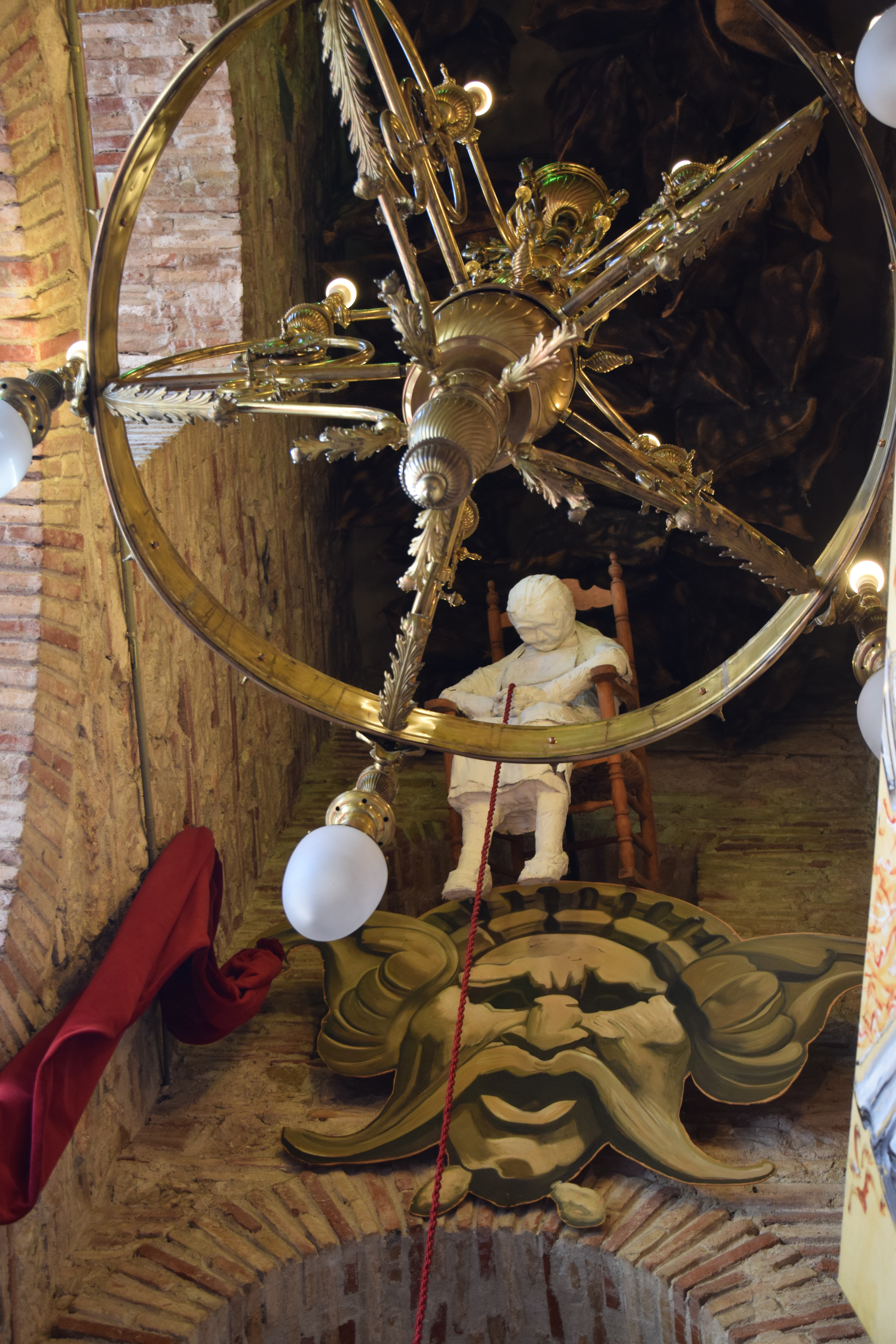
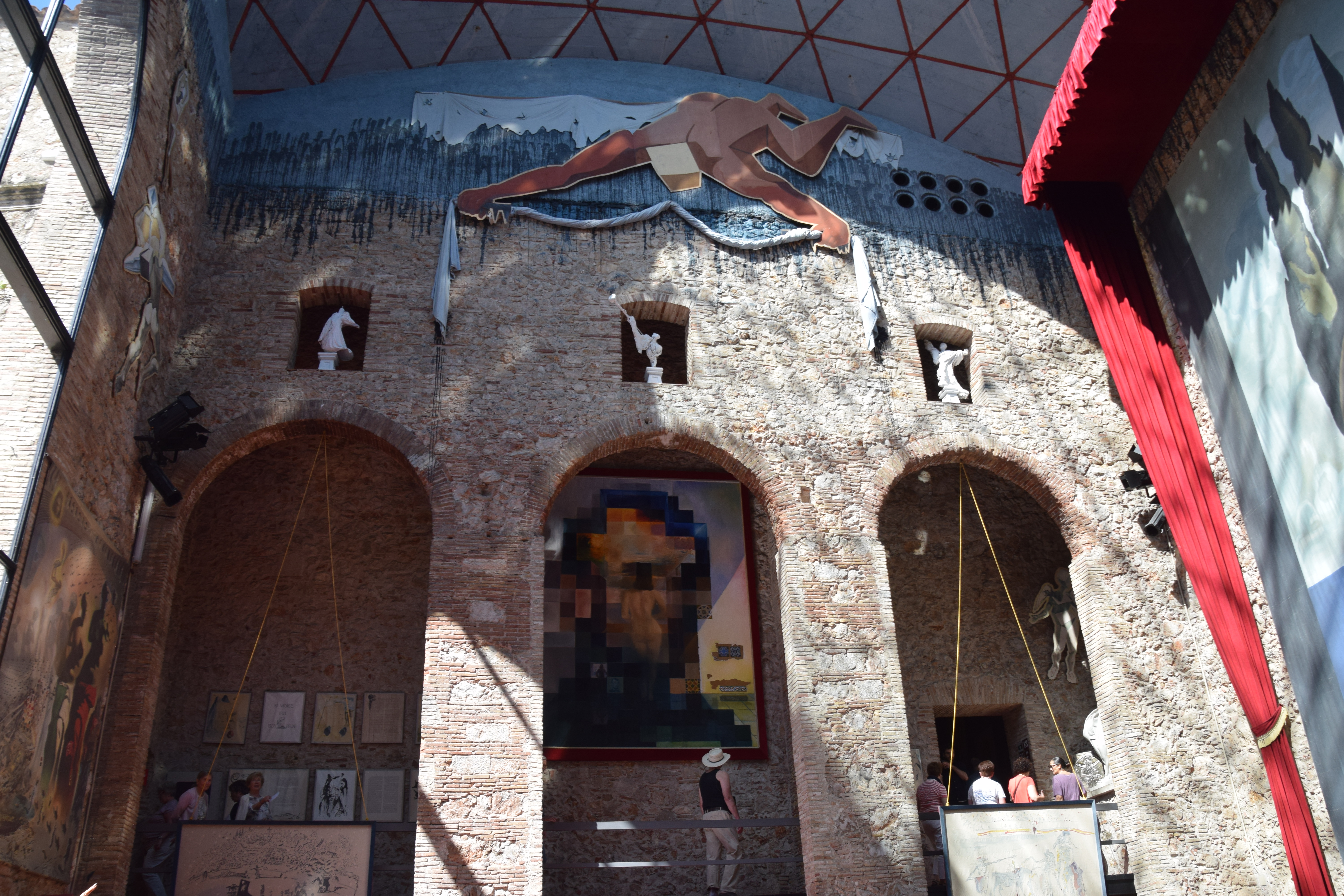
The theatre museum in Figueres – we devoted our single non-cycling day to this excursion – was slightly less weird, probably only because it wasn’t a place where people actually lived.  But now that I survey the photographs, actually also pretty weird.  As an artist he was prolific.

DSC_0441 DSC_0426 DSC_0454 DSC_0461 DSC_0445

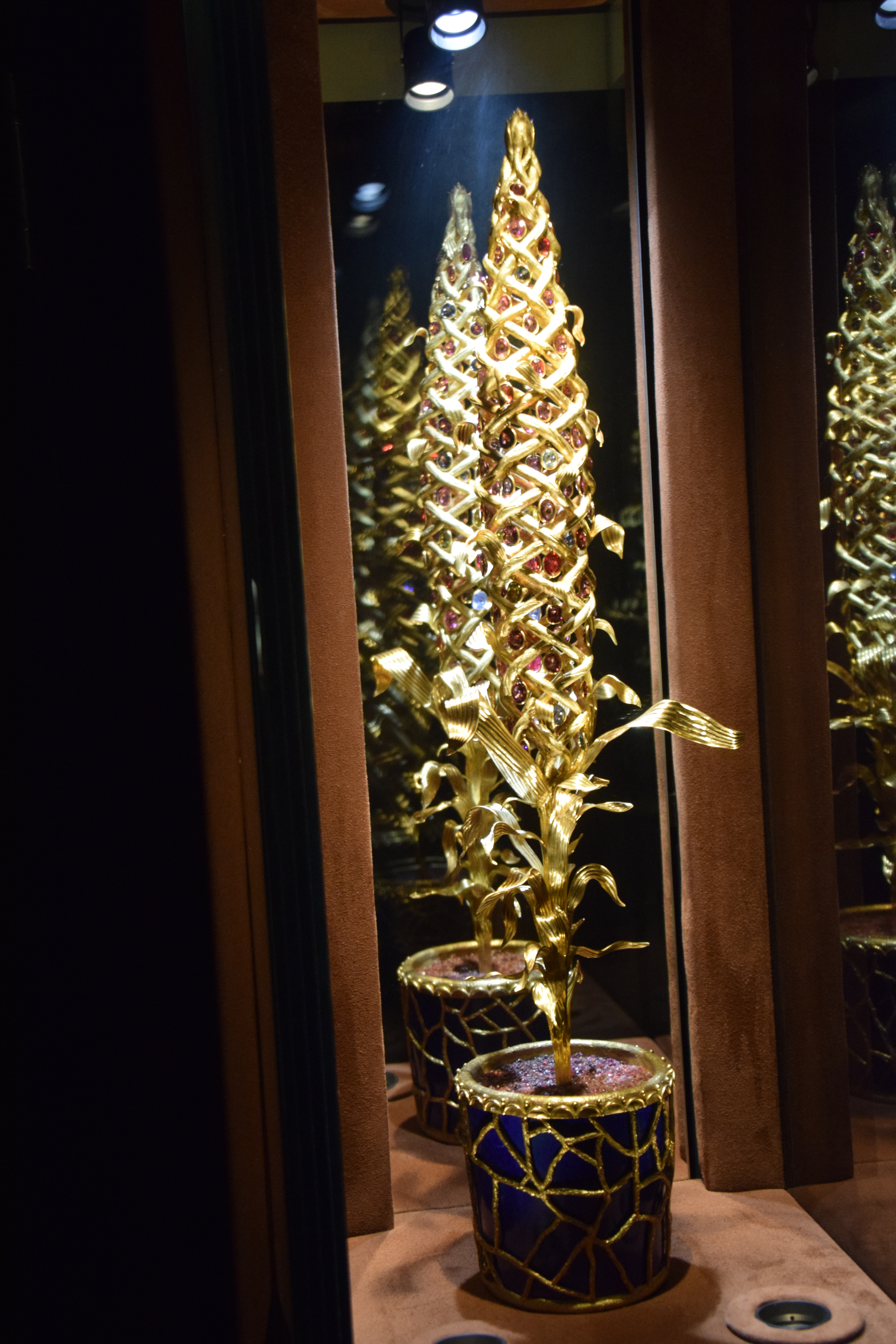
His jewels were a highlight for me – intricate pieces of precious metals and stones, perhaps a little less weird than the rest.

DSC_0498

Judge for yourself – a genuis, an artist, and a truly scarily weird man!  I leave the last word to the man himself:  “There is only one difference between a madman and me.  The madman thinks he is sane.”

Girona Grubbs

A week of vicarious enjoyment of cycling in Girona has brought with it a rich mix of expectations delivered, with a sprinkling of new discoveries.

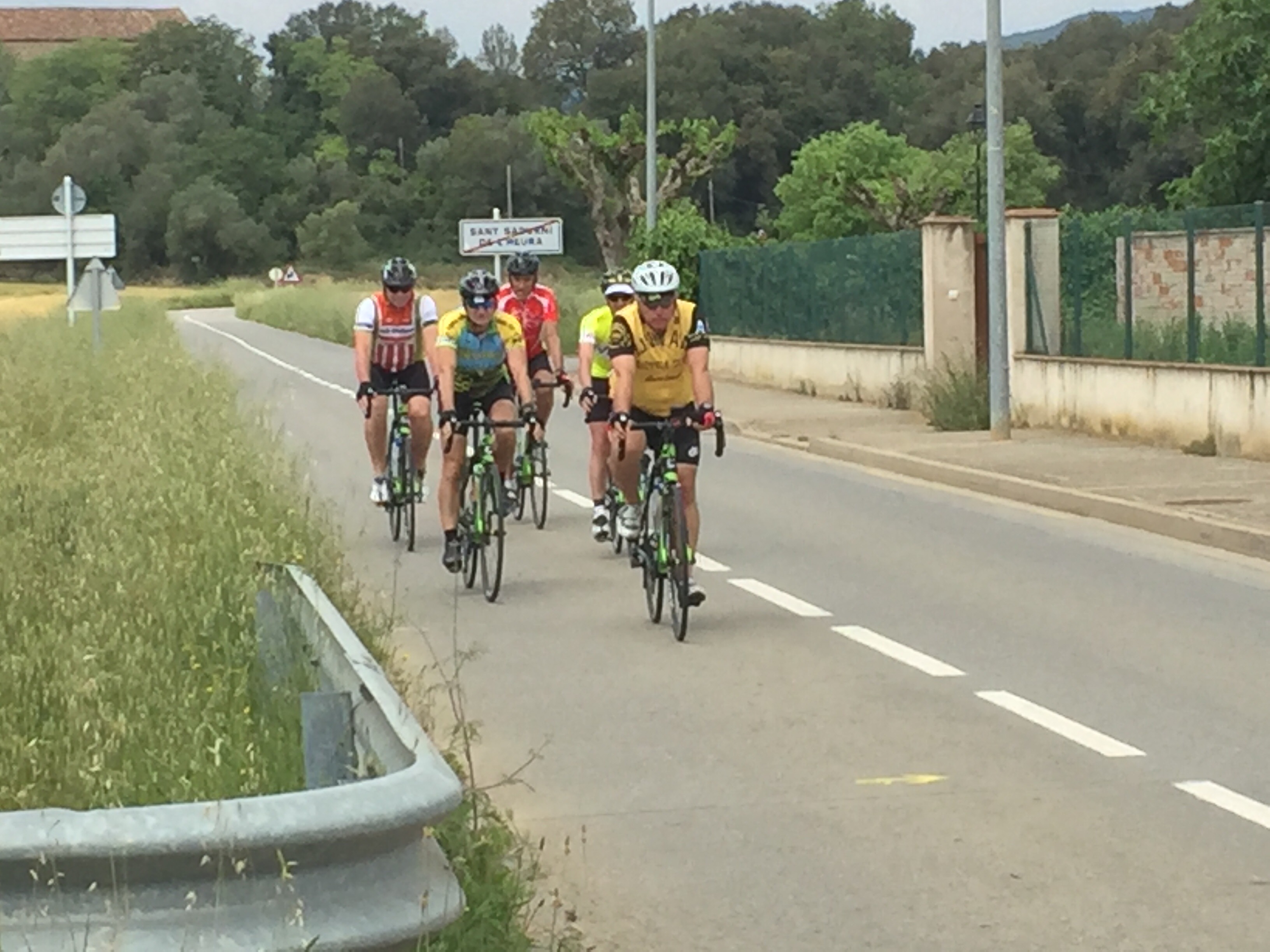
Not, let me be clear, that I am actually doing any cycling myself!    As a non-cycling hanger on to this, the annual pilgrimage to one or other of the cycling meccas of Europe provides a rich opportunity to observe the subculture that, in our part of the world, is labelled MAMILs – middle aged men in Lycra.  This time, we have a group of ‘grubbs’ – generally retired or unemployed biking buddies – though still very much in Lycra.  The label, and the fact that for the first time, bikes have been hired here rather than transported across the world, signals a slightly more relaxed approach, compared to previous trips.

DSC_0023

Unusually, this group is lacking one of those classic alpha-males, of the must-beat-the-rest-to-the-top variety.  With ages ranging across three decades, this is a group that rides together by choice.   Each morning they set out, not too much later than the agreed time… though it has to be said there was quite a lot of standing around waiting for everyone to be ready to go.

DSC_0021

The small frustrations of the first morning – when everyone was collecting their bikes, sorting out the fittings, remembering to eat!, discovering water bottles not yet filled – were not thankfully repeated, as everyone got more organised, discovering, for example,that the lift to our apartment could carry two bikes at a time if packed just right.    We quickly fell into a routine, settling on the next day’s ride over dinner the night before – the local bike shop a mine of information, and provider of a Garmin pre-loaded with the recommended ride for the day.  Morning started with coffee – our apartment equipped with an almost barista quality coffee machine – followed by breakfast, drink bottle filling, tyre pumping and so on.

Rides were varied, but generally brought the group home mid afternoon, with tales and sometimes photos of fields of wild poppies, beautiful scenery, and occasional dramas – “someone” not carrying spare tubes, or wandering off, or being unwilling to take instruction in appropriate bunch riding etiquette…  Having spent a generally peaceful morning pottering about old Girona, the two non-cycling wives would find them, at one of the preferred cafes, drinking beer and eating ham and cheese toasties.   


Laundry was the next priority, our apartment equipped with a decent washer but no drier, meaning that the lounge was generally taken up with a rather full clothes drying rack.  Then occasionally, another walk in the old town…

DSC_0287 DSC_0283

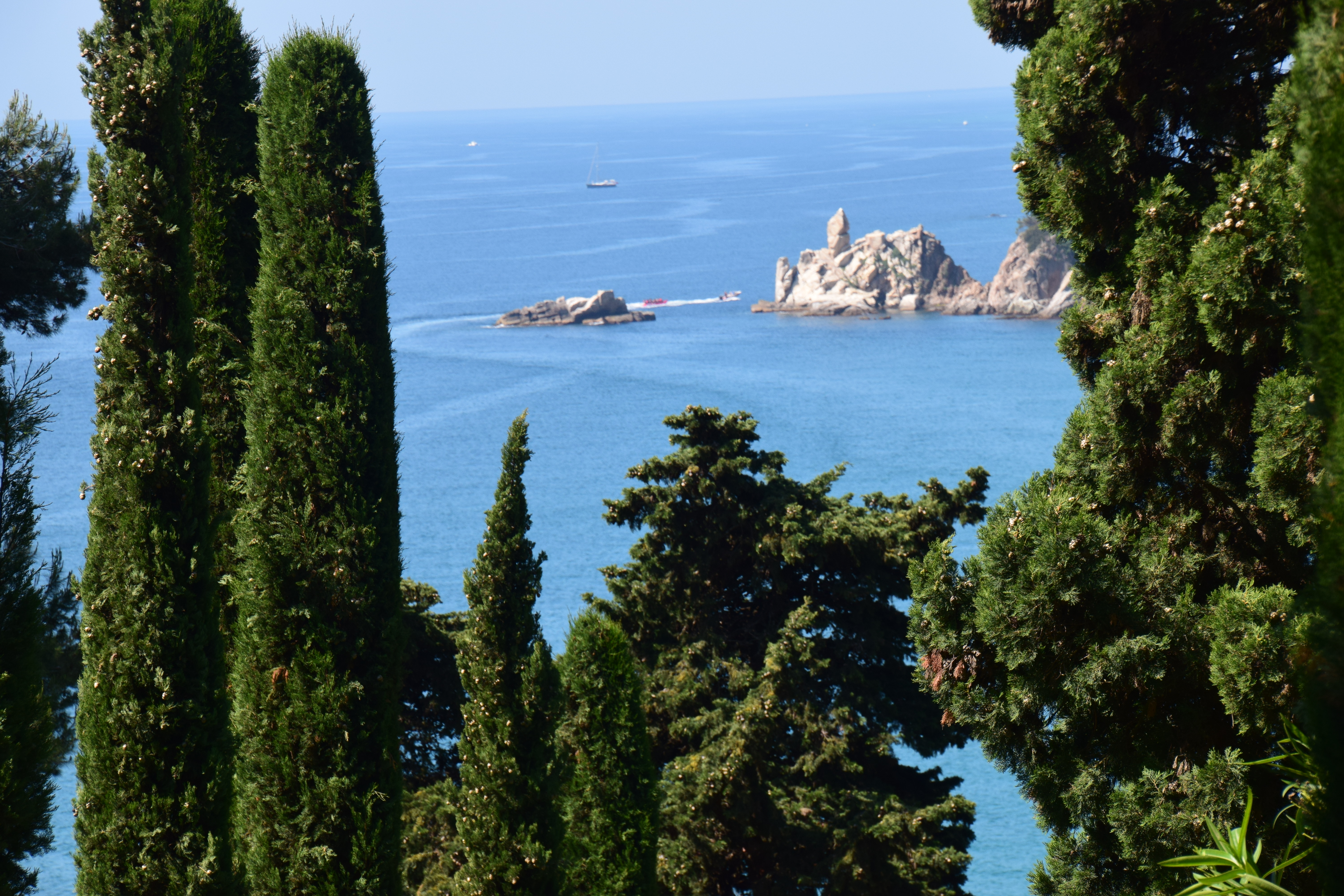
The day they road out to the coast – Tossa del Mar on the Costa Brava – I braved getting the car out and taking a drive to meet them for lunch, though it has to be said, we were a little waylaid by a spectacular garden a bit further down the coast, and arrived in Tossa to find they’d already eaten.

DSC_0320 DSC_0364

Oh well… we looked after the bikes while they walked up to the castle to see the sights.  I can report that the Mediterranean is extremely blue, extremely clear in these parts, but bloody cold!  People at the beach were mainly baking themselves on what was a very stony shale-like beach.  Reinforced my preference for sitting off the beach, with glass in hand, looking at the sea!

DSC_0404

Getting a group of 10 people to make a decision about dinner was perhaps our biggest challenge, made even harder by the realisation a few days in that the reason we’d only found what can only be described as pretty poor cafeteria type food was that the actual restaurants don’t open their doors until about 8.30pm.  At that point I took matters (and the list of recommendations from our AirBNB host) into my own hands, and decided that we would have at least two good dinners out – more about those later.

As the weekend passed the group started shrinking, with the departure of Paul & Helen on Saturday to return to London to move flats on Sunday.  I headed off in the same direction on Monday morning – to a much-anticipated conference in London, leaving the group of Grubbs to fend for themselves for the final few days.  I hear the tour was pronounced a success – with plenty of discussion about where to next.  I heard mention of Tasmania (much closer to home) or perhaps Norway!  I guess it will depend on who steps up to do the organisation – these tours don’t happen on their own!  And this one will be a hard act to follow.

A good life, and a good death

This is my submission to the Parliamentary Health Select Committee, currently considering a petition to change the law in New Zealand to support ‘physician assisted suicide’, or, as I prefer to term it, giving people choices at the end of their lives.

This is a personal story – please do not read it if you think you may be upset or offended.  It is my view, and only my view, of three undignified deaths in my close family in recent years.  To other family members – I truly recognise that your experiences of these deaths are different from mine, and that you may feel that these are not my stories to tell.  Everyone involved has their own perspective – this is mine, respecting that you almost certainly have a different view, and irrespective of that, mostly importantly, celebrating that we all, each one of us, cared very deeply.

So here is my plea to the legislators – exhorting them to lead, not follow, to a better more compassionate society.

The San people – the ‘tangata whenua’ of Southern Africa – have a way of dealing with dying.  A nomadic people in a harsh and unforgiving land, it is said that the final gift that the elder gives to the tribe is to sit, simply sit by the wayside, as the tribe moves on.  The choosing to die – a decision made while still in control.  I reflect on this, as I recount the story of these three undignified deaths, and make a heartfelt plea for a more compassionate society.

“One day, you will wake up and the pain will be gone – you will only have the good memories of your Dad”.  Wise words from a good friend, thank you Mark.

The pain he spoke of was not, I have realised, Dad’s pain – a pain that had thankfully already passed – but the painful memories not just of having to stand by and watch Dad’s pain and indignity, but most of all the pain of being helpless to deal with my mother’s pain.

Was it not enough that she had to experience the loss of her spouse of 53 years, her life’s companion?  As she stood by, riddled with her own physical disabilities – unable to assist in the increasingly physical task of caring for her beloved – her distress was palpable, her feeling that she was somehow letting him down by allowing sometimes family members, sometimes complete strangers to witness his indignities.

“I guess when you got on the plane (from London), you didn’t realise you were signing up for this”, Dad retaining his sense of humour as his 20-something grandson assisted in dealing with his soiled bottom, trying desperately to cause no further pain while wiping around the open wounds of bedsores and nappy-burn.

Deric, my Dad, had a good life – he told me so at our last lunch.  I’d persuaded him to come out with me one last time, in part to give Mum a moment alone.  We went to his favourite café, ordered his favourite chicken livers – not that he could each much of them.  We talked, finally, about his life.

Five months earlier his doctor had given him the news – liver cancer, probably secondaries, prognosis 5 to 6 months.  This was not Dad’s first brush with cancer.

Nearly a decade earlier, face / mouth cancer had led to major reconstructive surgery, surgery that left him disfigured (though those around him soon stopped noticing).  Then in his late 60s, he had had much to live for.  The first surgeon’s advice, that nothing could be done, was firmly rejected.  He was going to fight this, and he did.  The wonderful team at Auckland Hospital gave him a whole new cheek, and the even bigger gift of living to see his granddaughter married, and great-granddaughter born.  He adored baby Isabel with every fibre of his being, and she, now , still talks about her beloved “Dumpy”, even though he didn’t make it to her second birthday.

But now in his late seventies, he was ready to go – if one is ever ready.  His main concern was for my mother, who had never known what it was to live life alone.

I know my story is not unique, and in fact, there are many families less-equipped than ours to deal with this.  We did not have to worry about the financials of it all;  we had knowledge and education on our side, and a strong network of family and friends to lean on, despite being immigrants to New Zealand.  “South African by birth, Kiwi by choice” my mother has always said.  How much harder must this be for families battling poverty, families unable to have an ‘equal’ conversation with doctors, families who simply don’t understand the system (or even the language)?

Yet, as the oldest child, only daughter, and only child living in Auckland where my parents were, I nevertheless felt the massive weight of it all on my back.  With no time to process my own grief, I grasped for the one thing that I could do that I felt would make a difference for Dad – I knew that he desperately wanted to stay at home to die.  My mother, on the other hand, regularly asked when he would be going to hospital…  in her paradigm, hospital is where people go to die.  The idea of having a dead body in the house was just not something she could get her head around.

I am eternally grateful to Hospice – for everything that they did – but particularly for enabling me to have ‘that’ conversation with Mum.  I signed up for their ‘carer support’ programme – a weekly gathering focused on giving carers the practical tools – I invited Mum along, and she was not keen, but eventually agreed to go.  It helped to feel like we were prepared, but most of all, it helped to talk.

They also taught me to administer morphine through the injecting site that would ultimately be ‘installed’ in Dad’s shoulder as he became unable to swallow anything.  Don’t be cautious, they said – anytime he appears in distress, give him another vial.  I wondered if there was an unspoken message there.

But sadly no, when we were truly near the end – the endless sitting around waiting for death, hoping and praying for death – I took to Dr Google, looking up whether I could, in fact, change the course by administering the full supply in one go.  But no, there was simply not enough.

And so, I guess, that tells you which side of the debate I am on.  If I had had the provisions to administer that final dose, I would indeed have done it – not just for Dad, but for all of us.  Those final 48 hours were interminable – and to my eternal regret, when I could function no longer and went home to sleep, Dad finally took his last breath, with no one at his side.

My question is “why”.

“It takes time” the doctor said.  “His body is shutting down, you need to give it time to do that”.  But why?  It’s not like we were going to start it up again, and had to make sure it was ‘properly’ shut down!  Why couldn’t we just press the “off” button?

Let me be clear.  Dad was definitely dying.  There was no treatment, no cure, just the watching and waiting.  There was pain – not just for Dad (I guess, he’d say at least he had the morphine!), but for all of us, dealing not only with our own personal pain, but with the pain of the living, those who we care deeply about.  Having said his goodbyes, why was my dear Dad not allowed to simply fade into the deep goodnight, with his loved ones at his side?

I have reflected on the choices he might have made in a more compassionate society.  In Oregon, his doctor would have talked to him about “the prescription”.  He would probably have agreed to have the drugs available – whether he would have taken them himself, I do not know.  He certainly would not have taken them immediately following his diagnosis.  He seems truly content to have the time to ‘get his affairs in order’, the time to talk with Mum about the choices she would make when he was gone.

But the reassurance of knowing that he could end it if he wanted to, would, I believe, have made those last lucid weeks considerably less fearful.  It’s about having choices – choices for everyone, the choice to take control.

And yes, five years on, the pain of those days is faded, though I see it occasionally in my mother’s eyes.  It comes back with force when we are again faced with the same issues, the same choices, as we have been twice since then, with the passing of my husband’s two parents.

Each story is uniquely different.  Each would have had its own prognosis in a world where people have a choice of dying with dignity.

My husband’s mother, June, was crystal clear in her wishes.  Through all my nearly 40 years of knowing her, I knew that she was pro-euthanasia.  In a time where it was a mostly taboo, certainly seldom discussed topic, she managed to make it clear to all around her – not just her 3 children – that when she got the dementia (Alzheimers that runs in her family), she would, as she put it, jump off the nearest bridge.  This was not a flippant comment – it was a clear plan.  In the end, in one of her very last lucid moments before her brain died without having the decency to take her body along with it – she told her son that she simply didn’t have the courage to do it, that she could not bear the thought of her husband of 60 years having to find her body.

As it turned out, they were both spared the pain of seeing each other die.  That pain fell to the three children, all desperately devoted to doing the right thing for their two parents.

Sid, their father, surprisingly went first.  In one of those ridiculously trivial incidents that grew and grew, an ingrown toenail became an infected foot, that led to hospital, not once but several times.  Surgery to try to improve the circulation – for without blood supply, amputation was inevitable – ultimately unsuccessful.  A discharge from hospital into our home – all the while, him insisting that he was going back home to his little house in the retirement village.  We knew that was never happening, but humoured him, as we set in place a roster of full time nursing care.

Unlike his wife, Sid had never expressed his wishes about end of life care.  Even as he was wheeled into surgery that last time, when the medical team asked if he had a non-resuscitation order in place, or what his wishes were, he pronounced that he knew his “family will make the right decision at the time”.  This was, of course, not helpful – but it was his wish, that he didn’t want to think or especially to talk about end of life matters, and we respected that.

So we fell into a charade – knowing that he had rejected amputation, knowing that he would ultimately die of blood poisoning, taking the decision (on his behalf) to go without antibiotics that would prolong that process…  and all the while playing along with his demands to prepare for returning him to his home.

His pain was real, very real – and seemingly much harder to control.  His children argued about how to manage it, each, under stress, reverting to their childhood pecking-order.  The oldest taking charge, the youngest feeling ignored, the middle child feeling like, well, the middle child – the daughters trying desperately to care not only for their Dad, but for each other, for their brother…  their respective spouses standing at their sides, trying (and failing) to be supportive without interfering.

It was long, it was horrible.  Even when, finally, everyone agreed that the end was in sight and there was a space in the hospice facility, it remained seemingly impossible to relieve the poor man of his pain.  United in their love of their father, the three siblings pretty much moved in to the hospice room…  again, the days of waiting, the days of questioning why.

As a family of dog-lovers, we have all had the sad but inevitable moment when we make the decision about that trip to the vet – the moment of standing at your faithful companion’s side, stroking his head as the vet takes away his pain forever, the relief of knowing the suffering is over.  Perhaps we should have raised one of our own children to become a vet!

And so finally, we buried Sid.  The level of stress on family relationships at an all-time high, some just wanting it all to be over, a fitting send-off in retrospect, perhaps not fully appreciated at the time.  The final argument – should June be told, should she come to the funeral?  Is it right to withhold the news of her husband’s death from a loyal wife?  By then, her dementia was well advanced, and so the wisdom of her wonderful carers prevailed.  She never knew that Sid was gone – though from time to time, we would find her in a chair by the door, just sitting, waiting for “the man” to come visit.

My husband and I travelled a few weeks later to London, where the three grandchildren who had not been able to attend the funeral, along with an assortment of friends from his past, gathered for a memorial service.  Finally, away from the stress, we truly celebrated Sid’s life.

Meanwhile, it seemed the June’s body would just live on and on.  Always a fit person, the stress-free environment of the wonderful Awanui Rest Home (a dedicated dementia care facility) had seen her health actually improve, despite the withdrawal of supposedly necessary medications.

Unlike Deric and Sid, June had signed not one, but three separate directives about her wishes, including one which was crystal clear that she did not wish to live with dementia, and that all ‘life-saving’ medication and treatments were to be withdrawn if she could no longer care for herself.  Her children took her at her word, and once she was admitted into full time dementia care, somehow prevailed upon the medical people to stop all medication apart from pain relief where necessary.  This included blood pressure medication that she had been taking for decades – thereby, the medical advice said, dramatically increasing her likelihood of having a major life-threatening stroke.  Well, that’s exactly her intent, we said – that medication is reducing her chances of dying, it is technically therefore ‘life-saving’…  difficult decisions.

That was just the foretaste of difficult decisions to come.  The thing about end of life decisions is that everyone has the best intentions.  The family (at least in our case) wanted what was best for June, which we interpreted as honouring her very clear instructions while ensuring that she was not in pain or suffering at any stage.  Her carers at Awanui moved mountains to try to keep her in their care, where we all knew she was, if not happy, at least wonderfully content.  The doctors and nurses also wanted the best for her – healing of her hip (broken three times in short succession), “hospital care” which Awanui was not ‘qualified’ to offer (despite us offering to pay for full time nursing support).

It is in the nature of the Alzheimers condition that change causes distress.  We were fortunate – in a way – that having worked for many years in a hospital setting, June felt quite at home in a large hospital ward, but transferring her to a new and foreign place would, we knew, distress her enormously.  Her children dug in, at a time when they should have been supporting her and each other in their distress, they were instead trading ‘blows’ with the system, about threats of legal action to protect June’s “rights” from poor decisions made by her children.  A compromise was reached – hospital care in a small ‘non-dementia-ready’ facility, who only accepted her because she was bed-ridden and therefore not bringing along all the associated ‘wandering’ behaviours of the classic dementia sufferer.

In a private room, with only the television for company, June clearly decided – somewhere in the recesses of her addled brain – that enough was enough.  She simply stopped eating.  Who knows how much pain she endured from hunger pangs and dehydration, but ultimately, somehow against the odds, she did take back some control of her life in the end, and decided to die.  It is a tribute to her three children that they supported her through this, sitting by her side.  My husband said that he had already mourned her passing – his mother had died several years earlier to him, for without her wonderful brain she was no longer Mum – but nevertheless it was hard.

At June’s funeral, there was one thought I could not get out of my head.  We simply do not have a word in the English language that expresses the thought that surely was on the minds of most of our friends and family – yes, we are sad that your mother has passed, and yet we are just so glad for her and for you that her suffering is finally at an end, so no, we are not “sorry for your loss” at all!  Perhaps, in our generation, we will invent a word for that.

Through Sid and June’s dying, I stood by in admiration at the dogged determination, determination borne from true love, that their three children showed, despite their disagreements.  Their solid commitment to do the right thing for each of their parents, despite the obstacles that the ‘system’ threw into their path was admirable beyond description.  We should all pray that our own children show the same resolve.

For June, the answer is very clear – had she been given the option for ‘assisted suicide’, had it been part of the accepted mores of our society, she would definitely have done it.  Losing control of her life was the thing she feared most, and every time we reflected on her life at Awanui (incredible as the staff and the place are), we had to sadly admit that she would not have wanted to live like that.

Ironically, of the three, she is the one least likely to have been helped by the proposed changes to the legislation.  Dementia – possibly the biggest societal challenge posed by our aging population – is not, not technically anyway, a terminal disease.  There would not have been any conversation about an assisted departure for June, despite her fervent resolve.

And so we gather as a family, and we regularly talk about what’s next.  How will our generation deal with these issues?  How will we spare our children, and our spouses, the pain that we have endured, the pain that continues to shape our relationships with each other?

Is the solution a one way first class ticket to a clinic in Switzerland, as one suggested, accompanied by the daughter we know will support the decision, with the rest of the family not knowing until it is too late?

Is the solution a deliberate drive off a cliff, glass of champagne in hand?

Is it stockpiling medication in the hope that enough will be available when the time comes?  And more importantly, that we will not wait too long, not wait until we have forgotten what the pills are for!

These are real suggestions, made by real people, real New Zealanders (well, Kiwis by choice, anyway), who have attended to the undignified dying of three parents in the past few years.  Real people making their own plans, because they know that the law is not on their side.  Real people, looking at places like Oregon, where the evidence shows that taking a more pragmatic, more compassionate approach to dying does not, in fact, result in a huge swarm of suicides.  Rather, it gives people control, gives them choices and enables them to live out their last days with less fear of the unknown, in the knowledge that they have that control.

That is all we are asking of our legislators.  Compassion.

Compassion to enable dying people to take control, to make their own choices.  Yes, we are all dying, a little each day;  but as the end becomes inexorably closer, we want the ability to choose.  To choose not just how we ‘manage’ our own pain, but more importantly perhaps, to choose the time and way of our passing.  To choose to have our loving family around us, without them having to endure their own journey of pain to get there – for that is the pain that does not pass.

Yes, I am mostly now at a point where I remember only the good memories of my Dad.  But the thing that will never pass is my own pain, the pain of my powerlessness to deal with my mother’s and brother’s pain at their helplessness.  All I want is a future where we can truly celebrate that our parents, our friends, and eventually ourselves, had not only a good life, but a good death.

Thank you for reading my story.  This is a complicated issue, and one which I truly believe is worthy of all our efforts.  It is a mark of a civilised society that we treat our elderly with respect and dignity, and a law change supporting giving people back control at the end of life will, I believe, make us a more civilised, more compassionate society.
Our year of travel

2015.

Maybe it was something in the water, maybe it was a sense of impending old age.  Maybe it was the fact that we started the year with a house-full, literally, of Dwedish visitors, from about as far away as it’s possible to get from New Zealand – we loved having you here, Alex and Tea, and your Mums and other family!

Or maybe it was just the plethora of too-good-to-miss opportunities that saw us feed our wanderlust to excess this year!  Japan, Europe, Namibia…  not quite around the world, but certainly close to it.

The trip to Japan was particularly special – a long awaited opportunity for Howard to show us all what he misses about a place where he has lived and loved.  And suffice to say, we fell in love with it too.  Travelling in a herd of six adults and two children in strollers sounds like a daunting task, especially in a foreign culture and a country of 125million people!  Not so.

DSC_0359

The Japanese people are gracious and organized.  And it has to be said, just a little bit weird!

I went from not actually having Japan on my ‘must see’ list, to planning our next trip.  The only question is will it be for RWC2019?

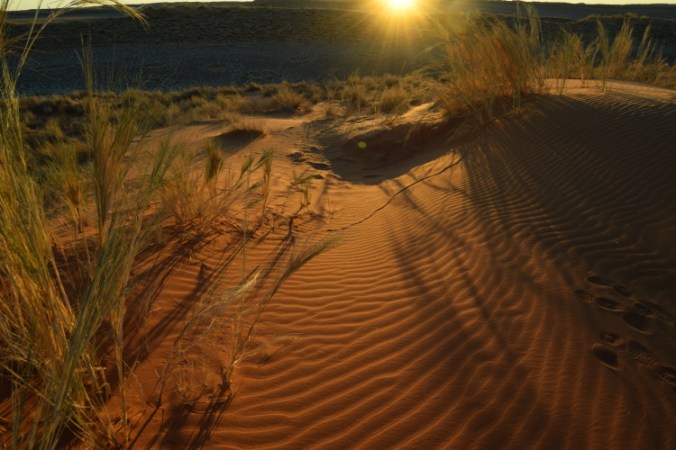
From one of the most populated places on earth, to one of the emptiest for sure!  Our road trip from Windhoek to Cape Town – 3,500km on mostly unsealed roads – was an opportunity to truly unwind and enjoy the vast emptiness (and again resolve to return, to see the northern bits of Namibia that we missed this time around).

DSC_1029

A trip prompted by a family occasion, a 60th birthday “bash in the bush” on the banks of the glorious, game-filled Crocodile River in SA.  Truly special, but a long way to go for a party, even a week-long party, so Namibia was a spur of the moment, while we are there decision, and one we were thrilled to have made.

DSC_0052-001

Europe was, as has become our habit, the annual cycling trip for Peter (this time a return to Argeles in the Haute Pyrenees), and an opportunity to stop in on Rob and Jenna in London.  Excessive, yes.

DSC_0755

Which is not to say there weren’t plenty of local highlights too…

  • a fleeting week-long visit from Rob, home for a friend’s wedding (and a bit of Cricket World Cup!) – a very well times wedding indeed!
  • the very excessive Trinity Hill Garden Party out at their gorgeous winery in Hawkes Bay
  • hosting a group of tables at the amazing Diner en Blanc in Auckland  (if you don’t know about it look it up – now running in over 40 cities around the world)
  • a birthday treat for Mum with a trip to Wellington, with Peter and Don’s partner Helen from Melbourne, to see the World of Wearable Arts show
  • a full-on international angel investor conference in Queenstown, with a truly exclusive wine tour at the end, organized by Peter and hosted by me when he sadly had to return home prematurely due to his mother’s health…

… the list goes on!

So this is ‘retirement’.

Somehow, in between all of that, Peter managed to find time to continue building his now vast and perfectly curated music collection, while ‘looking after’ one of our growing list of start-up investee companies as the investor director, doing some consulting to the Reserve Bank, and taking on some pro-bono advocacy for another company I’m involved with, in what should have been a quick and easy negotiation, but has dragged on for almost 6 months.

I’ve kept myself busy too, with a reappointment to the occupational licensing board for electrical workers, a couple of directorships and a fair bit of mentoring of young companies and their founders.  I really do love the challenge of building young companies – though I have to say that changing women’s lives one bra at a time is extremely hard work!  Besides bras, I am learning more each day about data analytics, property valuation and software-as-service… With a soon to be added interest in baby and children’s shoes.

Plus, of course, my most important role – being Ouma to the fast-growing-up Izzy and Matthew!

The downside of travelling so much is missing out on my weekly day with the grandchildren – something I’m making up for during the coming school holidays!  Izzy finished Year 2 at school, and Matthew has one more year at kindy before he joins her (well, actually at the boys’ school).

Izzy’s school reports talk of her unfailing enthusiasm, attacking everything with gusto, be it a reading task, a French conversation, a complicated sum (her real academic talent, I suspect) or even, amazingly the school cross country which she determinedly completed, despite only having 1 1/2 legs, and little ones at that!

Matthew is a real boy…  No ears, completely fearless and always hungry!  Articulate and nimble, he can not only climb into the most extraordinary places, but then engage in a debate about why he should or should not be up there!  Be it sitting in the upper story window with legs dangling out – “I’m just sitting” – or setting off for a “walk” across the top of the pergola over our front path…  Suffice to say, this is the child that Philippa always deserved!

Family remains the most important thing in our lives.

Our great sadness this year was to see June, Peter’s Mum, deteriorating after a number of falls.  Finally, in October, she seemed to decide that enough was enough, and passed away peacefully after what has been, for all the family, a truly anguished battle with Alzheimers.  Such a cruel disease.  She would have been so proud of Peter, Lindsay and Anne – battling for her rights, and her comfort, to the very last.

As Isabel observed, she’s now down to just one ‘great-grand’parent (having had – and known 5 when she was born!).   My mother (Nanna) just keeps on keeping on, despite many ailments which seem to limit her mobility more each week.  Despite her ever-present pain, she remains mostly positive, and still enjoys her craft groups, her friends, and especially having the children at her place regularly, playing board games with Matthew and teaching Isabel a vast array of arts and crafts.

DSC_0529.JPG

She remains generous beyond reason, always true to the adage that it is better to give than receive – a truly good person.

Waifs and strays dinners – a gathering of the younger generation of the family, and assorted others who happen to be in Auckland – has continued at our place most Monday evenings.  Sometimes a low key affair, sometimes a hotbed of debate and shouting…  food quality variable, company almost always good, an opportunity for Philippa and her cousins to keep in touch with each others’ lives, and with the lives of the rest who are now scattered to the four winds.  We miss you Rob, Catherine, Jess and James!

So now it’s Christmas.

DSC_0474

As we gather this year, we will remember those missing from our table, those who have passed, those who have settled afar, those who we hope will one day come home and those who are just travelling on various adventures.

More importantly, we will celebrate that wherever we and they are in the world, from country to country, from generation to generation, family is family.  We may be crazy, we may not always agree, but we know for sure that we are here for each other – and that’s why we gather with those who are here to celebrate!

Merry Christmas to you and yours!

Pairing for Parky

I state this with certainty:  There is more wine in our cellar than we can drink before we die.

What started as an interesting hobby, to accumulate a bit of nice wine to drink on special occasions, has turned into an obsession to never, ever have to drink young wine!

And while my other half tends (and continuously stocks) said cellar, I cook.  I cook to eat, I cook to share, but most of all, I cook as to create.  My children would know I’d had a rough day if they arrived home to find me chain-baking, tins lining up along the kitchen counter to take their place in the oven as others came out.  The perfect stress-reliever – particularly with a perfect glass of wine in hand.

When I taste good wine, there is an immediate question in my head:   “but what should I be cooking to eat with this?”  No doubt to the frustration of my fellow wine tasters, waxing eloquent about the nose, the floral tones, the spicy notes;  I instead am talking duck with cardamom, or garlicky rosemary lamb, sticky soy scallops, delicate poached salmon…

So when I was asked to donate an item for a charity auction, to support a colleague recently diagnosed with Parkinsons Disease, I hatched an elaborate plan.  A pairing for Parky, a matched food and wine dinner for 10 people – at home, because charity, of course, begins at home.  It sounded like a good idea at the time – but on the night, with close to a thousand dollars paid for what was simply “dinner at my place”, I have to admit to a small feeling of trepidation.

It’s an entirely different proposition, you see, serving up a dinner to invited guests of your choosing than to people who’ve actually paid (albeit to a good cause) to be sharing your food and wine.  I tried starting with the wine – but my husband was adamant: sort out the menu first, then he would match the wine.  So that’s what we did.


Our guests arrived to Hibiscus bubbles – a light but decorative flute of preserved hibiscus flowers in a local NZ Deutz methode champenoise.  As they sipped, they nibbled on red onion balsamic tarts, and blue cheese gougones, the tart richness offsetting the sweetness of the hibiscus.

Then on to the perfectly set dinner table, complete with bone china, silver and crystal…  usually reserved for very special family occasions; but nothing like a well set table to add a touch of “special” to an event.

A minor complication – one of our guests was vegetarian (thankfully declared well in advance, so easily accommodated).  More daunting, another an ex-chef…  Deep breath, let the service begin!

To start, herby haloumi cigars, on a salad of vegetable tabbouleh.  The crisp crunch of the phyllo pastry, with the interior richness of the cheese a perfect match for the rounded honey waxiness of a 2010 Alberino.  A grape so popular in Spain, yet little know here in NZ, where Sauvignon Blanc and Chardonnay tend to divide white wine drinkers into two entrenched camps, almost to the exclusion of all other varietals.

The main course was deliberately simple, designed to provide a backdrop for the wine, a beautiful perfectly aged 2002 Penfolds Bin 407, not quite at its peak perhaps, but a taste sensation nevertheless.  A classic cabernet sauvignon from an iconic Australian winemaker.  The roast beef fillet a tad overcooked – too much conversation at the table, my one near disaster of the evening – but no one seemed to mind.  Roast field mushrooms replacing the beef for our lone vegetarian (these too overcooked, go figure!).  I steered clear of the obvious chocolate sauce, preferring to complement the mocha and blackcurrant tones of the wine with fresh crisp green beans and bright tomato salad – and of course, the melt in your mouth beef fillet.

Cheese came next – a French custom that to my mind provides a perfect transition from the serious food just eaten to the frivolous food to come.  A beautiful blue and aged cheddar from Whitestone, a small local producer, with Pinot Noir jelly…  And a choice to stay with the Penfolds (definitely my pick) or move on to the aged Riesling that was to come with dessert.

Foregoing my natural tendency to equate dessert with chocolate, I went for an easy-to-match lime coconut pudding, with a tiny glass of homemade limoncello on the side (for pouring over the pud, of course) while sipping on the gorgeously rich and limey 2003 Mesh Riesling.

Our wines had taken us around the world, from New Zealand, to Spain, through the Barossa & Eden Valleys in Australia.  Our guests were replete, the cook self-satisfied, the cellar a little emptier…

Most of all, we celebrated that a simple dinner party could contribute so much to our colleague’s lifelong project to support Savong School in Cambodia, a mission becoming ever more challenging for him as Parky impacts his life.

And so we paired up for Parky, pairing our food and our wine, our cooking and our hospitality, our effort with our guests’ generosity, to support a Kiwi doing good work half a world away.  And it was good.

An entry into the #MWWC21 challenge

wine-stain1-3

A fundamentalist walked into my church

Today, the ugly face of Christian fundamentalism showed itself in my church, and it was not good.

Fundamentally, I know that the Bible says that those who do not accept Jesus cannot be saved.  But in an alarming and particularly poorly timed sermon, our guest preacher (a student from the local theological college) propounded his view that those who are not with us are against us – enemies of Christ, in his words.

On this day of all days, when we should have been standing arm in arm with our brothers and sisters of every creed, whatever they believe in.  At a time when I want to rush up to the Muslim woman walking down my street and tell her that I know Isis does not represent her, nor the majority of her fellow believers; at a time when I want, irrationally, to beg my son in London to come home… instead I sat seething, arguing in my head with the narrow-mindedness I was witnessing before me.

Fundamentally, of course, he is right… and that is why we call that view “fundamentalism”.  No amount of “I’m sorry if this offends you” or “I’m happy to debate this with you” will change the fact that it is this very view, technically “correct” but in no way “right”, that has been at the heart of every religious war in the history of mankind.  This is why the crusades were fought, why we endured the “troubles” in Northern Ireland – the list goes on and on.

Indeed, man’s inhumanity to man is so often justified by religious belief, the belief that we are the chosen people, and you are not, that this on its own turns many away from religion of any sort.

Now of course our young(ish) soon-to-be-minister was not suggesting we go out and slaughter the infidel!   No, we need to hold them close, love them and use our best efforts to save them – but never forgetting that they are the enemy.

I wanted to stand up right there and rail against his narrow view of what I consider to be my religion, my beliefs.  I wanted to remind him, and the gathered congregation, that Chistian fundamentalists are no better than fundamentalists of other cloths and creeds.  And that having the ear of believers is a privilege, a privilege that gives your words power to do good and evil, more so perhaps than guns.

I realise that my beliefs are not his beliefs, and that 2 minutes into any debate I would have revealed myself as what he might consider a faux-Christian at best, at worst even an imposter.

Instead I was saved by the bell…  actually by the arrival of the children from Sunday school, with a particularly rowdy grandson giving me the excuse I needed to leave the service to play outside in the tree, to reflect on why I was there at all.   I come most Sundays, bringing my mother and grand-daughter, each of whom cares more about the church than I do – I come because I care for them, and because just occasionally a precious gem emerges from a sermon that resonates, supports or simply comforts me.

Am I the only one in those pews each week who does not believe that Noah actually took the animals two by two into the ark?   Literally?  Who knows? Who cares?

But this I do know.  I could not stand by and say nothing in the face of such fundamentalism.

And no, I am not sorry if my views offend you.

Investment, foreign aid or just 21st century colonialism

Is colonialism dead, or is it in fact alive and well in Africa (again)?  And when is “progress” just progress, and when is foreign “investment” to be welcomed, with no strings attached?

Like a woman with low self-esteem who keeps being attracted to unsuitable partners, it might appear that some African countries are! just maybe, succumbing yet again to the “blankets and guns” enticements preferred by foreign explorers, using “development” as a rationale for establishing and securing a supply chain.

For wasn’t that what the Dutch were doing when they settled in the Cape of Good Hope… establishing and securing a supply chain for precious spices from the east?  In this case, the precious cargo is minerals, the supply chain is roads, lots of roads, and the colonisers are from the east.    

Most visibly on this trip, in Swakopmund, which is booming thanks to a large influx of Chinese workers.  The Chinese, we were told, have bought a 40% share in Rossing uranium mine, and are building a new wholly owned mine just down the road at Huseb due to open in January, which will be the largest opencast uranium mine in the world.  The locals have a small grumble about failure to employ “enough” local workers, but are otherwise pleased to embrace the progress and foreign investment.

Elsewhere in Africa, it’s roads that appear to be the focus (maybe not required here in Namibia where the mines are literally a stone’s throw from the rapidly expanding port at Walvis Bay).  In Rwanda last year, I blogged about the amazing roadworks, literally from one end of the country to the other – overseen and funded by Chinese expertise and money, but employing local villagers for each stretch, leading to a patchwork of stretches of road in varying levels of completeness.  When done, that road will take all the heavy traffic between Burundi and the port at Dar Es Salaam away from the sensitive wildlife areas.  A good thing, surely…or just more of the supply chain.

And our fellow travellers, Anne and Willy, who have just driven down from Malawi though Mozambique, report simlarly significant, similarly funded, roadworks underway.  

One cannot help but be reminded of the long ago ambition of that great colonial, Cecil John Rhodes, whose ambition it was to build a railway line from Cape Town to Cairo.  Seems his ambition may yet be realised, only not quite as he envisaged, with the romance of rail replaced by the efficient practicality of winding black tarmac – all in the name of progress.  

I recall a old man in Zanzibar telling me some 10 years ago that Eastern investment in his country was preferable to Western investment, which inevitably came with strings attached.  Expectations of democracy, and western “standards” of law and order, for example.    And hence my question – is it still colonialism when the deal done is simply investment in return for resources, with no intention to “civilise” or indeed, to colonise in any major way.

But I am no historian, no sociological scholar…  And as my dear old dad would have said, I am probably talking about things I know nothing about!

Childhood memories

Travelling through the North Western Cape has been like a trip down memory lane. Not that I’m suggesting the people and places are in any way ‘behind the times’ – not at all. It’s just that they have retained the history and traditions that I left behind 40 or 50 years ago.

Tuis-nywerheid (home industries) stores in every small outpost, stacked chockablock with goodies that Ouma used to make – vetkoek, koeksisters, melktert, soetkoekies, beskuit in half a dozen varieties… Not to mention the knitting, crocheted doilies and covered coat hangers!

DSC_0798

I even have become adept at ordering my wortelkoek in Afrikaans. Peter, surprisingly, has become heeltemal tweetalig… Falling easily into a conversation in Afrikaans with the garage attendant a few days back about the stukkende wiel!

People are genuinely amazed when we progress beyond “baie dankie”, leading to all sorts of questions about us and our lives. Genuine interest from lovely people.

DSC_0539

Our two nights in the Sophia Guesthouse in Garies did not disappoint.- though it was not without a few shocks (from the shower taps, real electric shocks!). With no electrician in town, I was vaguely tempted to “phone a friend” – I mean, I do know a couple of electrical workers- but in the end we just reported the fault, and used a hand towel to turn the taps on and off!

DSC_0803 DSC_0544 DSC_0799

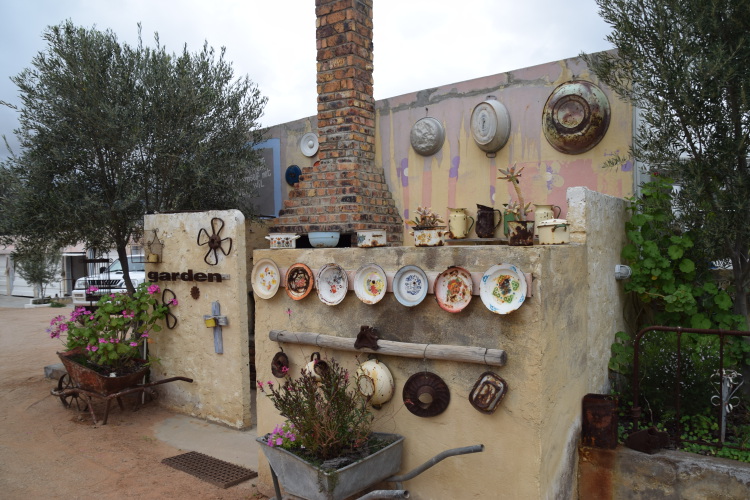
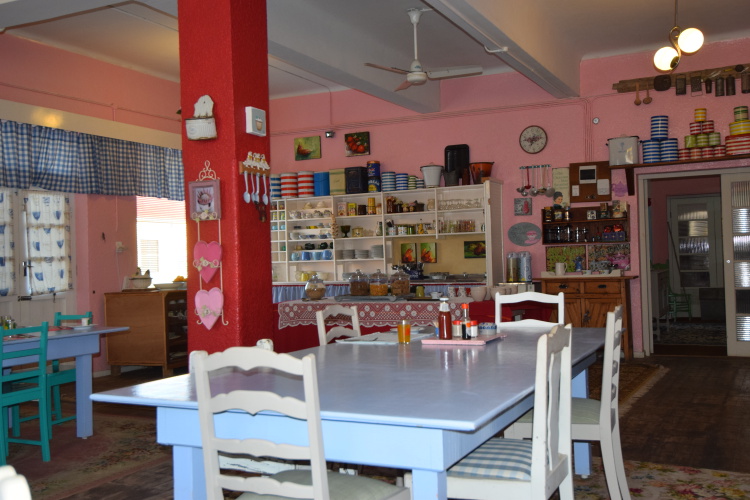
The place itself was like the Kingdom of knickknackery, from the front door to the bathroom and beyond, run by the generous, bustling Elizna – a refugee from Johannesburg – who has clearly found a home for her vast collection of egg cups, teapots, flower bowls and general whatnots. Despite being the “self-catering” cottage, there was a full English breakfast every morning, and on the second night she announced they were cooking “lamb kerrie” for dinner, if we would like some served in the cottage. It came complete with peaches, jelly and custard for dessert – a long time since I’ve seen jelly made with ideal milk!

And yes, I was the annoying foreign person who scoured the store shelves of Garies for butter – and no, sorry people, but margarine is NOT butter! They have spreadable margarine, baking margarine, low fat margarine… But definitely no “egte botter”!

From there it was on to Clanwilliam – over the scenic route across the Cedarberg.  Another day of hindsight pronouncing that we should have hired a 4WD vehicle!

Two unexpected and special treats awaited – first our host who turned out to be an amazing quilt artist – check out http://www.enidviljoenquilts.jimdo.com – besides running a really lovely B&B. We loved the quilts so much we’re bringing one of them home with us!   This is just one of many gorgeous examples, this one hanging in our bedroom called Burning Desire.


And second that my cousin Belinda – who I last saw when we were literally children – actually lives in (or more correctly) on a farm remotely near Clanwilliam. Thanks to the wonders of Facebook, we not only connected but arranged for what Peter and I expected would be a quick drop-in for a coffee and hello before we headed on to our next destination.

What a treat awaited us. Belinda and her lovely husband Willie made us so welcome, showed us their huge and amazing rooibos tea farm, the wild flowers, the caves, the bushman paintings…


They fed us boerewors rolls for lunch before sending us on our way with a store of newfound knowledge about life on their farm, how the tea is grown, harvested and dried, how they grow lucerne trees to feed the sheep, and use donkeys (and an Anatolian sheep dog) to protect the sheep from leopards! Genuinely another world…

But most of all, I really loved reconnecting and talking about our mutual grandparents, and family members in general (though I have to admit a small problem on my part keeping track of which “Oupa” was which!)  A fantastic catchup… and not without its drama, when as we were about to leave, Peter discovered he’d dropped his cellphone somewhere out there on the farm. Willie and son Brendan sprang into action heading in different directions to search – found in the cave, where we crawled through the rocks! Many “baie dankies” to you all! It was SO lovely to catch up we may even return one day soon!

And thank you to you and to all the warm, kind Afrikaner folk we met along the way who reminded me so much of my childhood!  This part of the world is truly your place, as it has been for generations, and it is wonderful to be reminded that in some places at least in this rainbow nation, there are good people just getting on with their lives in mutual harmony.

One big game park

“Actually, Namibia is just one big game park”  – so said Peter about half way into our road trip, having discovered that wherever we drive, there are random animals wandering around of the ‘wild’ variety.

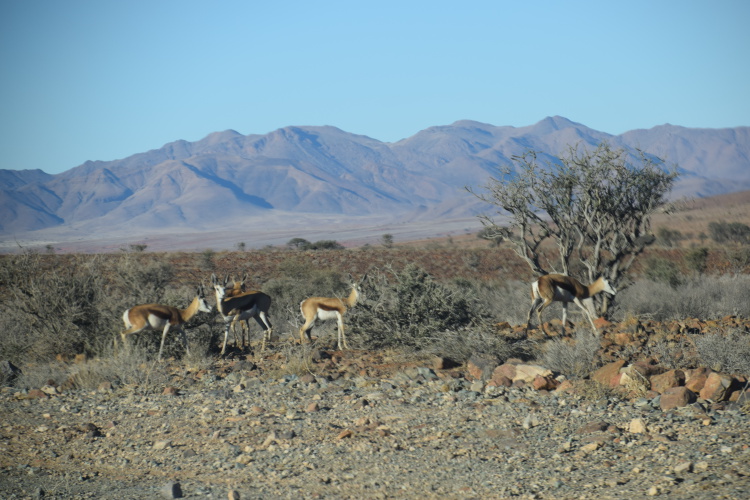
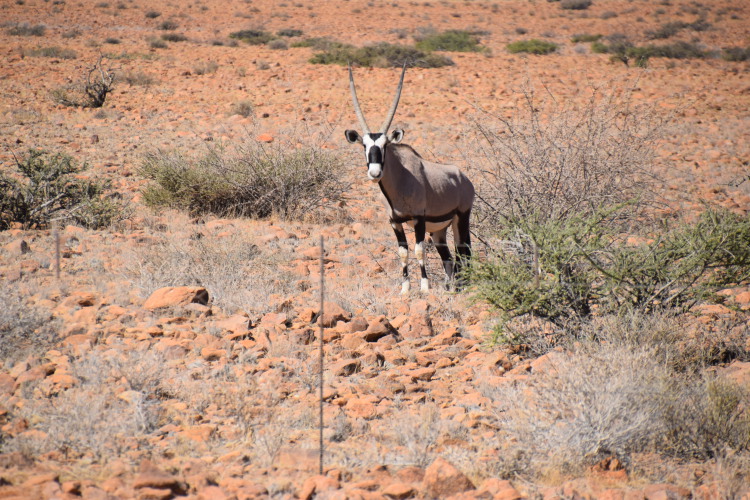
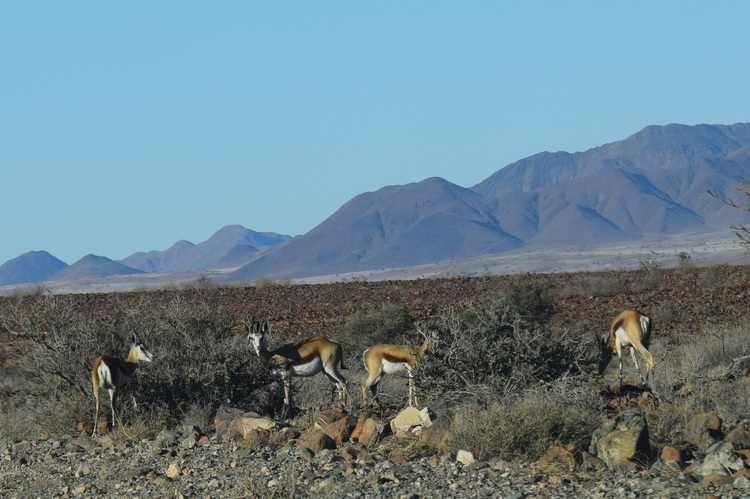
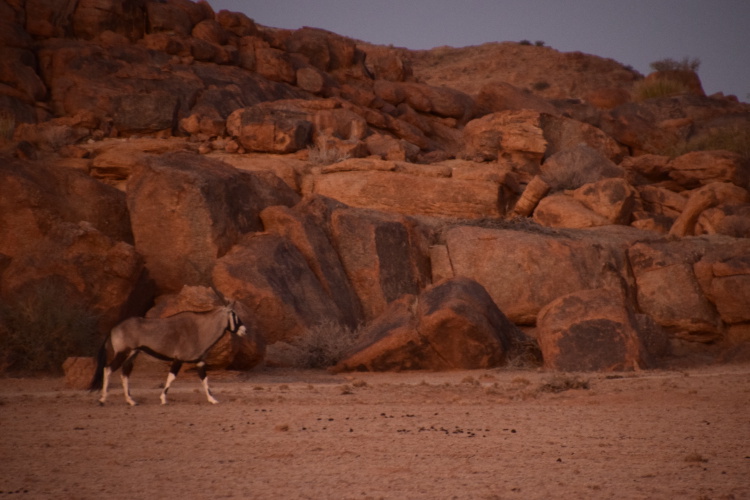
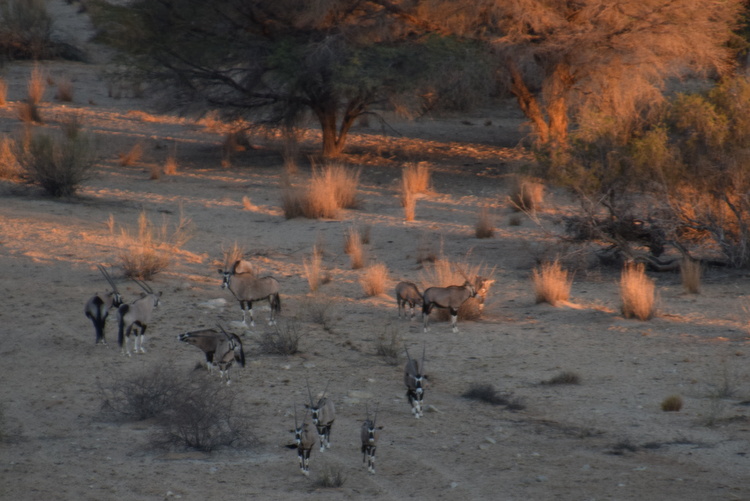
The caution against driving after dark is wise advice, with baboons, springbok, gemsbok, and even this random ostrich thinking nothing of racing across the road in front of the car.

DSC_0412

The springbok are stupid and insubstantial animals – but the gemsbok (oryx) are genuinely beautiful (and tasty too!).

DSC_0253DSC_0903 DSC_0938 DSC_0252 DSC_0938DSC_0367 DSC_0352

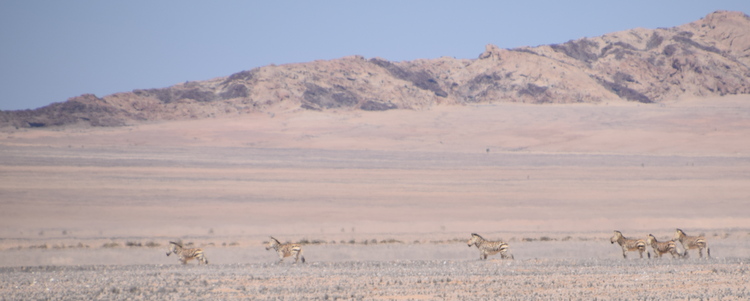
Given that our journey did not extend up north into the actual game rich areas around Etosha, it seems that Peter is right.  At least as common as “normal” road signs are signs exhorting motorists to beware of buck, ostriches and even zebras crossing the road.  The only zebras we saw were, thankfully, quite far from the road – thankfully because these mountain zebra are in fact quite rare, and road crossing is likely to be hazardous to their long term future.

DSC_0872

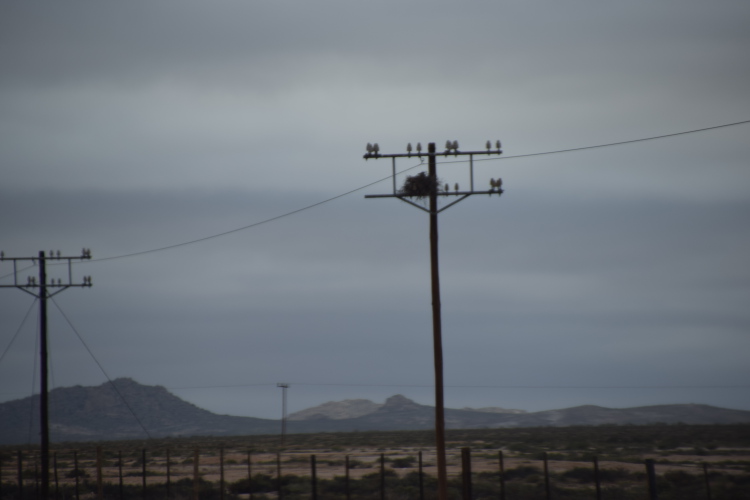
Animals adapt – quite remarkable to see these huge creatures living in total desert. -though the best example of adaptation I saw had to be these birds in the Kalahari, who in the total absence of trees, we’re building their nests, and even raising their young in the “forks” of telephone poles.

DSC_0519

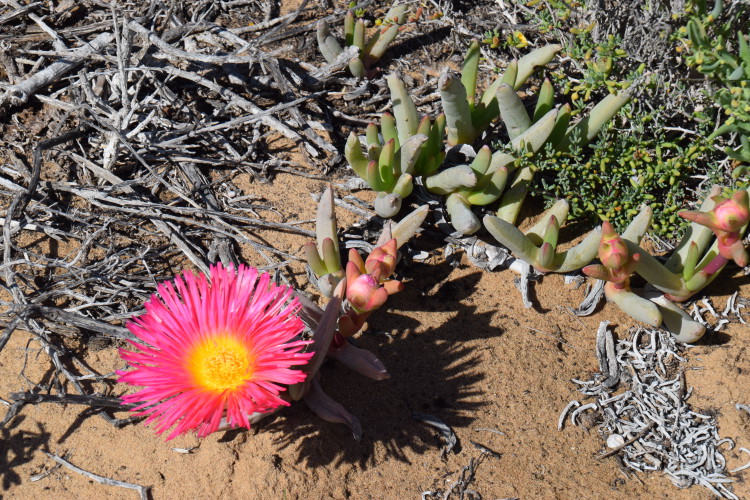
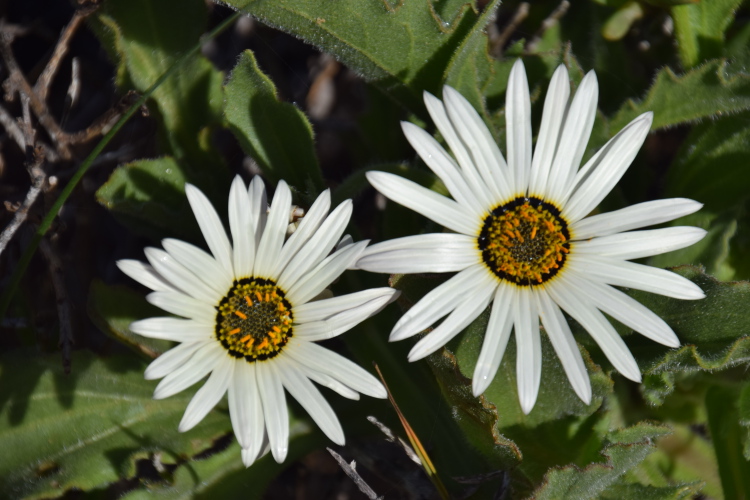
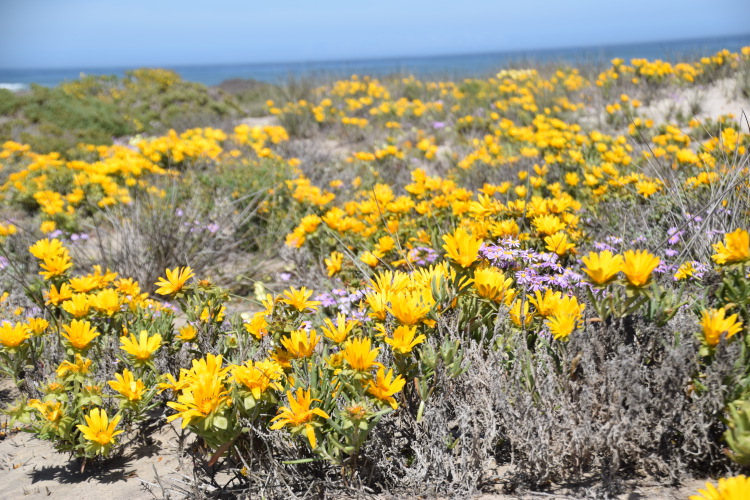
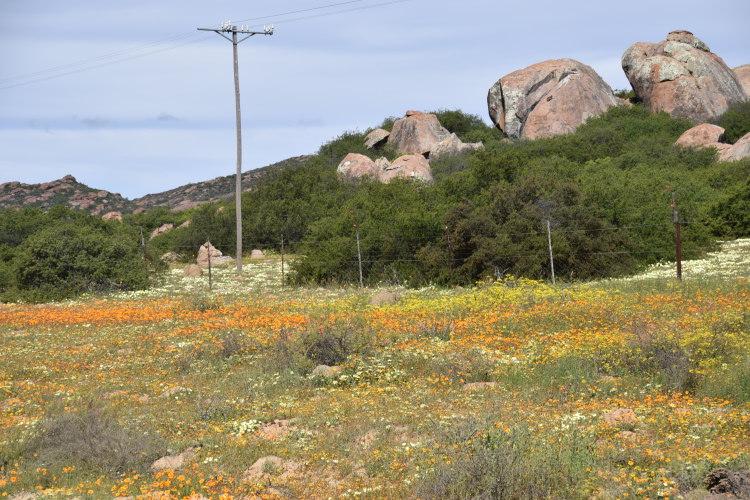
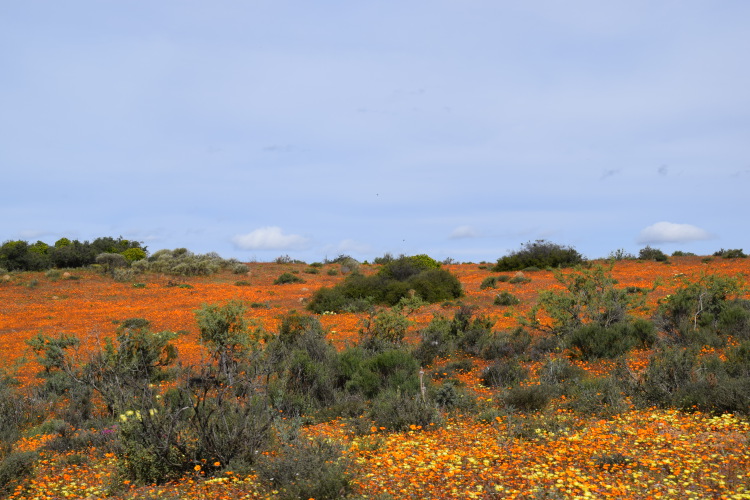
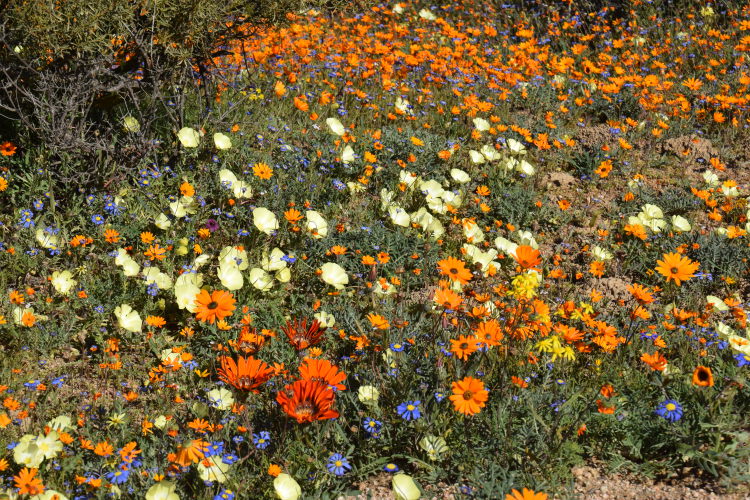
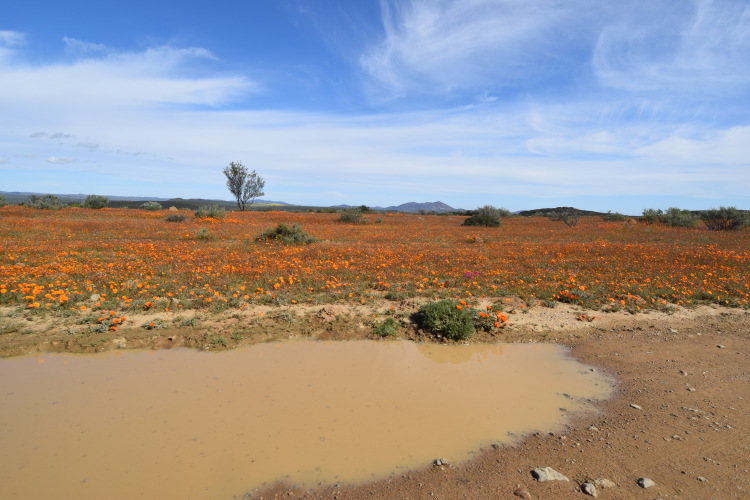
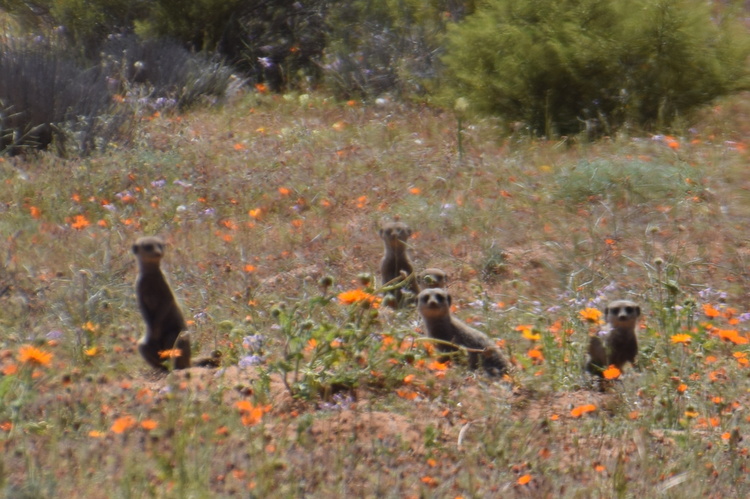
One last bit of wild life viewing today with these real life meerkats amongst the Namaqualand flowers, and a slow journey back to the main road with Peter stopping for every tortoise we saw crossing the road (and there were many!).

DSC_0686DSC_0674

I got out of the car to assist this little guy to get to the other side safely – he wasn’t happy, struggled as much as a tortoise can, and then went inside in a sulk once I set him gently down.  Ungrateful tortoise!

DSC_0675-001