A new day – Athens redeems itself

A perfect addition to any holiday – an amazing specialist coffee store, with its own roaster, just one block away, AND they open at 6am.  Great start to the day (sadly, discovered the following morning that this does not apply on weekends).

DSC_0042

So onwards and upwards to the actual purpose of the trip – time to get on that bike.  My tour-provided e-bike is ALMOST a replica of the one I have back home, just without the Cannondale logo.  A trial run doing a 3 hour ride around Athens – thankfully 90% off road, meaning the only challenge was navigating the pedestrians who pay not one blind bit of attention to my madly dinging bell as I pull up behind them.  A minor spill – no damage done to me or bike – as a pedestrian pushed me into a kerb;  my trusty sweeper guide said “good, you know how to fall”!  I laughed and assured him I’d had plenty of practice.

Colleen our guide – an American lawyer who gave up her law practice to move to Athens 14 years ago – is a mine of information;  with a delivery style best described as “enough but not too much”.  We did a loop mainly on the Acropolis walkway, taking in points of interest along the way.

Socrates prison – a cave in the rock with iron bars, where he was incarcerated for corrupting young minds with thinking stuff;  the Pnyx, a completely unassuming ‘field’ where the first democratic assemblies were held – 14,000 people, men only of course.  A side excursion to see a ceiling painted by the man who will be our driver on the tour;  a brief stop of Syntagma Square to view the tail end of the very elaborate changing of the guard (basically men doing what could best be described as dressage).  Most fascinating was the ordinary soldier, who when the two guards had come to a stop at their guard houses, visited each in term to arrange them in exactly the right place, straighten their shoulder pads, hats and particularly tassels, before inviting the crowd up to take photos (but not too close).  As soon as anyone got close enough to be in the picture, the guard would bang the base of his rifle on the stone to summon the soldier to remove said intruder.

Realisation of the day – if you can’t pave your streets in gold, why not just pave them in marble!  Great for maintenance, but bloody hard on the feet.

The obligatory greek salad for lunch – did I say that the tomatoes here are amazing, possibly the best part of Greece so far?  And then “home” for a lazy afternoon (or in Peter’s case, a bit of a catchup on work stuff).  I really do need to get some done myself, but taking a surprisingly Greek attitude to that (“domani” or some such thing).

Useless fact – on the 1st day of the months, Greeks use a special greeting – happy month – when they greet each other.  Sure beats “a pinch and a punch for the first of the month”.  Note for Isabel!

Our week long cycling tour began with a 6pm briefing, and a meet your fellow travellers session at the rooftop bar in the hotel where we were meant to stay before Debra decided to AirBnB it.  The kiwi contingent arrived early, thinking we’d have a beer together before the others got there – but no, sorry, we’re not ready for you (despite other guests having drinks), and no you can’t sit in the shade, we’ve made your space over there (in the blazing sun).  The words “naff off” passed some lips, as we gathered a bunch of bar stools and sat in the middle of the thoroughfare in front of the bar, defiantly ignoring the consternation this was causing.  “Wow”, said Stefan, “if this was a Kiwi bar we’d all have a beer in hand by now.”

Discovery of the afternoon – the Kiwi sense of humour is going to be a challenge for our three Californian fellow-cyclists, and our Greco-American guide for that matter.  Peter’s suggestion that we chuck Don and Gary (the oldest cyclists ever to do this tour) out at the bottom of the hill (we start at the top) so they can warm up before the start was met with bemusement.

More about the cyclists later – next stop dinner with Stefan and Peter, just the three of us attracted to a rather gorgeous restaurant, appropriate named Sense – and boy, was it a treat for the senses!  A balcony table (so long as you leave by 9.30pm) overlooking the Acropolis as the sun set in the background, fine dining service and food to match, and of course, great company.

I’m still salivating over the pigeon (breast and leg, perfectly boned out) with smoked vegetable accoutrements;  the boys had suckling pig – a shared mouthful confirmed this as definitely the next best choice.

And can I say – who knew about olive oil ice-cream, well, semi-freddo (served in a frozen lemon shell, with another filled with a lemon sorbet which would have been the pick of the night, but for its friend on the plate!)  I NEED that RECIPE!

Leaving the wine choices to the waiter – we are, after all, Greek wine virgins – was an excellent decision with two fabulously different bottles of gorgeous red wine, perhaps served in the wrong order, but he wasn’t to know about Kiwi drinking habits, after all.

All in all, a very good day…  and looking forward to hitting the road to Peloponesia and first stop Nafplio for two nights.


Welcome to Athens, with a gang of pickpockets on the side

I often think that the only disadvantage we have, living in New Zealand, is that everywhere is just so bloody far away (well, everywhere that counts, anyway) – and some might say this is an advantage!  What it does mean, of course, is that getting to those far flung places still on the bucket list takes time, effort and energy.

Perhaps we’re just getting old – but this year our pilgrimage to Europe started with what I was calling a ‘slow plane’ to Athens, stopping off at Singapore for an extended 14 hours stopover (longer than intended due to airline schedule changes after we’d already booked).  Never mind – we thought having a full day in Singapore, one of our favourite places from past travel, would break up the long journey, and give us time to start re-setting our body clocks.  In fact, what it meant was that we were just doubly tired, in fact completely exhausted by the time we arrived in Athens (via a short stopover in Istanbul to change planes).

But before I get to Athens, a few observations.

It was great to see that Peter hasn’t lost his touch at staring down officious wait staff who take that “sorry we don’t have a table for you” approach, when the restaurant (in this case the breakfast room at Raffles Hotel in Singapore) is visibly heaving with emptiness, and our man simply thinks that because we’re not staying in the hotel, we might not be able to pay for their generously priced a la carte menu.  “Perhaps you’d like to look at the menu before I prepare a table” he offered weakly in response to Peter’s stare-down.  Harrumph!  Sometimes it’s just so rewarding to flash that Platinum Visa Card (but only at the end of the meal, of course – and he wasn’t to know they’re a dime a dozen in New Zealand!)

A bit of retail therapy confirmed that the store we’re most missing in New Zealand is NOT, as some may think, Ikea, but actually UniQlo.  Please please find yourselves a site in Auckland!

Oh, and a message for Air New Zealand who helpfully prepared all our boarding passes at check-in in Auckland.  Yes, you’re still fabulous compared to other airlines (though the gap is closing, as you join the downward spiral of waning customer service!)

But it’s the little things that count, especially when, like me, you’re a Star Alliance Gold traveller choosing to fly Economy Class.  I know that’s my choice, and I long long ago gave up hoping for an upgrade, BUT seriously:  In what parallel universe is it okay to seat your apparently most valuable customers in Row 41 of a plane that only has 42 rows.  By then – the last leg of our journey – I had completely lost any sense of humour or rationality, and was just deeply pissed off!

And so to Athens…. a city of ruins, of amazing tomatoes, of streets teeming with tourists (still, in September), of unbelievably bad parking in narrow streets which seem almost permanently gridlocked…  and pickpockets.  Having traveled the world, including some pretty crime ridden places like Johannesburg and Rio, having evaded a gang of thieves who targeted us in the old market in Buenos Aires, having that sixth sense from growing up in a highly security conscious environment, I can honestly say we have never encountered such an orchestrated organised gang of petty thieves.

They bundled us, literally, into a carriage on the Metro on a train that we knew was going in the wrong direction.  About 10 men surrounded Peter, apparently “helping” him with his luggage as the doors were closing, having shoved me into the carriage and out of their encirclement…  I knew it wasn’t right, knew we had to get off the carriage at the next stop, but by then the damage was done.  A secure travel wallet had been opened, and the zipped bag of cash extracted – so slickly that Peter was completely unaware it had happened when the train drew to a halt in at the next stop and we both shoved our way out, up onto the street and into a waiting taxi.  We thought we’d had a lucky escape!

I’m pretty sure it was the effects of our long journey – tiredness and inattention – that made up such easy marks.  I asked Peter “what did they get” – nothing, he said, that’s why I have this secure travel wallet…  but lo and behold, when he opened it to pay the taxi, the cash purse was ALL GONE!  Bastards!  Thankfully the cards (and passports!!!) were still there – as a slightly concerned taxi driver, mostly concerned that he might not be paid, drove us through the snail-like traffic to find the nearest ATM.

Oh dear!  It could only improve from here – although I have to say I didn’t think it was improving much when I discovered a spiral staircase of 45 steps up to our apartment, and a cold shower.  The latter was quickly remedied by reading the host’s instructions to turn on the boiler – instructions that our fellow travelers had apparently missed – the stairs, however, remain firmly in place.

As an aside, Greek plumbing is interesting, and probably the topic of whole separate post, with photos, in days to come!

On the plus side, the bed is comfortable, our four fellow cyclists are not complaining – though I suspect they were hoping for something a little more like the gem I found in Girona last year – and there is plenty of food in the surrounding streets.  A HUGE bonus for me and Peter was to find a truly professional coffee roaster, serving the most amazingly crafted coffees from SIX AM in the morning, just one block away!  I was his first customer this morning.  Only one small suggestion for improvement – “Coffee Dive” is probably not the most customer-attracting name (though perhaps it means something else in Greek).

And while we’re on the topic of names,  then there’s the lovely effusively welcoming Harry, at Gods’ Restaurant.

DSC_0859.JPG

With a menu running to about 10 pages, he simply asked “what do you feel like eating, are you hungry or not so hungry” and then made beautiful recommendations – and came through with some very drinkable local wines as well.  Not all of our party took to this style of eating – menus are for reading and considering after all – but some of us were just relieved to have someone else telling us what to eat (My Food Bag, anyone?)

So to bed…  some 60 hours after leaving Auckland, we were pretty much asleep before our heads hit the pillow!  Up next, cycling, with a  bit of history on the side.

A storm in a shotglass

I was a little bemused this week by the (small) furore –  a storm in a shotglass really – that arose when an angel investor apparently told a startup founder that she’d have a better chance of raising investment funds if she was single.

“If I invest in <company> and its CEO @named – it’s because she’s awesome and not ‘cos of the douchebag investor misogny she’s faced” raged one well meaning supporter on the soapbox that is Twitter.

Around the traps where women gathered, the incident was universally proclaimed as shocking, yet another reflection of the added hurdles faced by women entrepreneurs – and this in the same week as International Women’s Day.  And I don’t mean to belittle the efforts of well meaning armies of women, professing to support each other.

My initial reaction was “oh shit, was that douchebag me?”  It sounds like something I would have said (more on that later).

And then, on confirming that the offending investor was indeed male, I wondered – was there subtext?  Was Mr Angel actually hitting on her,  wishing she was single?  It happens….

But no, apparently not.  His sole crime was to share with her one of the many truths – like it or not – about how angel investors choose where to place their bets.

The thing about single founders – men and women – is that investors (right or wrong) see them as less encumbered.   Building a startup is hard.  Long long hours, stress, travel perhaps, unreasonable demands on your time and your energy.  If you have a wife and kids, a mortgage perhaps – it’s harder.  Of course,  a husband willing to support you and the family while you grow your dream is a plus… and the main reason why this “single people preferred” rule is actually more disadvantageous to male founders.

It may sound like prejudice – indeed it is prejudice – but I can tell you that I know first hand the guilt I feel as an investor director every time I think about my married founders’ families living on a fraction of what they might earn out there in the workforce, in search of the dream of a bigger pot at the end of the rainbow.

Yeah I’m soft.  Maybe not your average angel investor, I know.  But more than anything, this little storm firmed my resolve to continue pushing the angel community to be more honest with founders.

We are doing them no favours when we invite them into our ‘pipeline’ on the promise of a fair, unprejudiced process.  Angels are looking for deal flow, and suffer from FOMO much much more than the average millennial!  The more deals we see, the more chance there is of finding the one we like.  It’s a beauty pageant – only without a consistent set of judging criteria.  Founders beware – we appear to encourage and support, we may actually put in time and effort sharing our expertise and our networks with you, but when it comes to deciding whether or not to write the check, a whole different set of criteria come into play.

In fact when I looked at the pitch deck of our supposed victim of misogyny,  another common angel dealbreaker came to mind.  Alongside the “single people preferred” rule is the “no married couples” rule.  More than half the hundreds of angel investors I’ve surveyed over the years have told me they never, ever invest in husband and wife teams.  They won’t even assess the company on its merits – a husband and wife founder team is a dealbreaker for them.

We need to be honest about these things – each angel is making an individual decision,  based on his experiences,  beliefs, and frankly, what else he has in his portfolio.   When he rejects you, it may not be about you at all – but chances are he probably won’t tell you the full reasons why.  Why would he when doing so opens him up to being pilloried for his honesty?

I don’t know who the angel in question is,  but I do know he’s part of a pool of people donating their time to support young companies – for free.  Rejecting his honest opinion as misogyny simply places this founder slap bang in yet another of our difficult to back buckets – the “uncoachable founder”.  I recently had the experience of having a private comment passed on to a founder team, resulting in a difficult conversation in which they wanted to know WHY I said they are uncoachable – who wants that?

The real message is that every rejection is simply one investor deciding that that founder and his / her business doesn’t meet their personal criteria for writing a cheque.  It’s not a rejection of your worth, it’s not a rejection of your idea – it’s simply a message that this is not the right investor for you.  And actually, it would do well to bear in mind that if I’d invested every dollar of my angel portfolio into Auckland property over the past five years – a much less emotionally and time-draining exercise – I would have already more than doubled my money, and been able to realise those gains in real dollars.  Investors have the right to decide where to invest – what you should not let them do is make you feel inadequate, but ultimately that’s your choice.

So dear founders, know this.  Finding your perfect angel is hard hard work – but when you do,  they can truly make you fly.  Along the way, you will kiss dozens, maybe hundreds of frogs, but each of those frogs has a lesson for you that will make you stronger,  more resilient and ultimately more investible by the right investors for you (assuming of course, that your idea is not actually a dog!)

DSC_0022.

Will you still speak up?

It’s so easy to express outrage:  outrage at the abomination that is the “executive orders” emanating from the new president of that place that we previously respected as the “leader of the free world”.

So many of my friends, and many of their friends, are filling my social media feeds with protest, with disgust, with a clear rejection of the politics of fear and hate that sadly has marked the start of this new year.  I am with you.  I too celebrate the scientists, who have rejected their muzzling orders with a giant F’U;  the lawyers who have flocked to airports to support and represent those locked out despite their green cards, their student visas, their established family life as legal American residents.

But perhaps unlike you, I reflect on what comes next, and wonder:  will you still speak up when the stakes are raised?

Will you still speak up, when doing so causes your friends and family legally in the US to appear on FBI watchlists;  when you are denied entry to the US yourself because of something you’ve said on Facebook;  when your children are denied that job or promised place at the university of their dreams because of your anti-Trump tirade.

For this is how it starts – and I have lived in this type of society.  A society where even within the bosom of one’s close family, politics was never spoken for fear that the security police would come in the night and simply ‘disappear’ you.  “That will never happen in America”, I hear you say, and wow, I hope you’re right.  But the reality is that fear and disenfranchisement breeds tyrants, and that is what we are witnessing right now, right there in Washington, DC.  How far are we truly from a “presidential guard” that enforces with those ever present guns that right of the president to rule by decree rather than by due process?

Somehow, we in the West seem to be inured to tyrants when they appear in societies that are not like us.  We look on Mugabe, on Zuma, and on the many other Asian, African and Eastern European tyrants of the past (and present) with a removed, analytical interest, never for a moment thinking this could happen closer to home.  But Trump and the US is not that other type of society – these are “our kind of people”, or at least, we thought that they were.  We are witnessing the rise of a tyrant within our very midst, within the heart of the free world…  and it is truly frightening.

So I ask you again.  Will you still speak out, when the stakes are raised, when it is no longer “safe” to do so, when there are repercussions not necessarily directly for you, for others whom you hold dear?

For that is the true test of who we are.  Tonight I watched with dismay as our our own NZ Prime Minister side-stepped the issue, simply saying that this – the cruel and ignorant rejection of Muslims en masse – is “not something NZ would do”.  Well, I should hope not – but honestly, I expect my government to go further than that.

While the people at large, the public, the “common man”, are trying to hold Trump to account, I expect that my government will do the same – and frankly, bugger the consequence!

Don’t confuse me with facts, my mind is made up

A recent satirical heading in The New Yorker  “Earth endangered by new strain of fact resistant humans” reminded me of my oft stated contention that the problem with democracy is that we give everyone the vote.  Don’t get me wrong.  I’m not suggesting that only people who think like me, who support the same candidates I support, or the same party, should be allowed to vote.  Democracy is all about not just tolerating but embracing a diversity of ideas.

But what I am suggesting is that the complete lack of evidence-based decisionmaking in the democratic process means that it truly is broken, that there is indeed a strain – I prefer to call it a herd – of fact-resistant voters, who simply shortcut the decision making process by picking the candidate who shouts the loudest, has the most familiar name or just looks like a really good man.  (No accident that the stats show the tallest candidate often wins – that’s what leadership looks like to the herd).  It is these – the ignorant, the uninformed, the can’t be bothered – who are responsible for our broken democracy.

My frustration is magnified today as the voting papers go out for our local body elections.  A postal vote in itself belying the importance of this decision in Auckland, a city which is home to fully one third of our country’s population, with its infrastructure groaning under the load of rampant growth, and its ratepayers under serious financial stress as property prices and rental levels skyrocket.

Faced with a certainty that we will elect a new leader – for that is what the mayor is, a leader who ‘rules’ by influence rather than decree – we must choose between a career politician (retired from a lifetime career as a Member of Parliament) and a range of business people and others, none with anywhere near the public profile of the man from the Beehive (what we call our parliament buildings), Phil Goff.

Researching the candidates, one stands out for me.  A business leader, who resigned her job as CEO of one of New Zealand’s biggest and fastest growing companies, a company which Forbes named last year as the world’s most innovative growth company, a company with an enterprise value of over $2billion.   Vic Crone left her no-doubt high paying corporate gig to fight the good fight, based on her plan for making Auckland great, talking the fiscal-responsibility talk.  Having seen the economic impact of having a successful businessman running the country, I’m personally attracted the opportunity to elect a successful businesswoman to lead our biggest city.

To my frustration, the election debates that I have had have mostly been completely free of any critical assessment of the candidates’ respective abilities to get the job done, nor even clarity on what that job actually is.  Phil’s credentials for Mayor are all about who he has been – an Aucklander born and bred, a long time MP, a political party leader (who was never actually elected to run the country).  Those are facts.  But when asked what he has achieved, what evidence there is of a direct influence on outcomes, his supporters simply say that he is a good man.  I cannot argue with any of that.  How does one debate what one man has been and is, with what one woman has done, managed, led and achieved?

Personally, I prefer to put the fate of my city in the hands of someone who has actually run a major enterprise, with real money and real accountability to shareholders.  I’m voting Vic because she understands that you can’t spend what you don’t earn, that the ability to tax the ratepayer does not present a bottomless pit of funding for pet projects, and that to spend where it is needed, the money needs to be saved elsewhere.  Victoria Crone has done the sums, herself.

As I see it, Auckland’s biggest problem, and its biggest opportunity, is growth.  The growth is happening.  Who better to lead up through it than the woman who until very recently was the leader of the world’s most innovative growth company?

I’m not asking you to vote with me – I’m simply asking you to think, to read to consider the evidence – before you vote for whoever you believe, based on the evidence, will be best for Auckland.  Don’t join the herd of fact-resistant humans whose motto may well be that telling statement, apparently going back to Plato “don’t confuse me with facts, my mind is made up”.

Governance at the coalface of the future

I always knew that when I retired from my day job, I wanted to be a company director.  I never imagined how hard that would be – after all, if governance is at least in part about strategy, and I’d made a very good living shaping strategy for my many corporate and public sector clients, why would I not be highly desirable in the governance pool?

Well, it turns out that the drive for diversity in governance doesn’t actually extend to recognising the value of people who have started and grown their own businesses.  In the traditional governance pool of potential, I am labelled by what I am not:  not a corporate C-suite executive (past or present), not a partner (current or ex-) in a major law or accounting firm, not a high profile academic, not a has-been politician.   (Note that I do not say “not a man”, because I remain convinced that my female-ness is not the actual barrier.  It never has been – but that’s the topic of another rant yet to come.)

But undeterred by my obvious disadvantages – the things that I am not – I embarked on a concerted ‘networking’ effort.  The director community was, I have to say, extremely generous in giving me advice and encouragement – but in reality, I am reminded of our exhortation to angel investors to just be honest with founders and say “no”, quickly and firmly.

Nevertheless, in the absence of a clear ‘not in a million years’ message, I persevered.  Alongside building up my interests in young companies through mentoring and investment, I discovered that the easiest directorships to get are on those early stage company boards – positions of low prestige, massive challenge, and massive opportunity to ‘make a difference’.

This appealed to my values. In  my business, in place of our company vision and values, there was a simple statement on the wall:  “I am not just here to make a living.  I am here to make a difference.”  For me, helping entrepreneurial, high growth start ups succeed, is the one thing I can do to ensure that New Zealand does not become just another Pacific Island – a place where old people live, and young people visit to holiday or see their whanau.  I’m here to make a difference.

And so it is that I have developed a bit of a following as ‘a font of knowledge’ – note, I do not say “the font of all knowledge” – on the topic of governance for start up companies in New Zealand.

With  8 ‘early stage governance’ workshops under my belt, attended by over 100 aspiring early stage directors, I guess I can lay claim to at least being in touch with the issues of governance for the early stage companies that I and my fellow “angel investors” support with what we like to call “smart money” – investment dollars that bring with them time and involvement to help the business grow faster, and spread further, and hopefully make us, and the founders, richer!

New Zealand is the ultimate ‘upstart’ nation:  at the top (or close to the top) of the World Bank’s list of the easiest places to start a business, to do business.  My fellow ‘angels’ and I invest in some 120 start-ups a year, and with the investment comes the requirement to establish a governance board, a board of directors to guide the company to the future.

This is where I have cut my governance teeth – in an environment where directors are donkey deep in the doing, where ‘noses in, fingers out’ has no meaning at all, where the primary concerns are ‘runway’ and ‘burn-rate’, and we, the directors, are standing shoulder to shoulder with the entrepreneur;  believing, risking and literally sprinting from one milestone to the next.

The war stories are legendary, the battle scars raw…  early stage boards are not for the faint-hearted.   But as I observe the dialogues in the traditional governance community, I can’t help but reflect on the palpable lack of enterprise;  the investment in the established status quo;  and, honestly, the lack of support for what is, in effect, the ‘sub-culture’ of directors getting down and dirty to help grow NZ Inc.

While established companies generously offer internships to ‘future directors’; while the Institute of Directors offers ‘mentoring for diversity’;  there is a large pool of governance talent cutting its teeth in the most challenging of environments, in companies that will ultimately make a real difference to New Zealand’s future. With minimal resources, minimal access to advice, little but their intelligence and native smarts to guide alarmingly frequent decisions based on limited information, these early stage company directors are making decisions that will ultimately shape our economic future.  If we’re going to build another 10 Fonterras (and I truly hesitate to hold them up as an example of anything), start-up land is where that begins.

“What about the risk?”, I hear you ask.  The reality is that risk management is not about minimising risk.  It is about understanding the level of risk you’re willing to take to maximise your opportunities, and nowhere is that more clearly understood than in the startup sector.

Perhaps we on these start-up boards should be offering internships to more traditional, experienced directors, to experience the reality of governance life at the coalface of the future.

But meanwhile, how ironic is it that the easiest entree into governance is in companies which have the biggest challenges, the least resources, little or no access to professional advice, and the least ability to pay their directors what they are worth.  Nevertheless, I and my fellow start-up directors persevere, not just to keep a beady eye on our investments, but to make a difference for these companies that we believe will ultimately make a difference to New Zealand.


Mothers and sons – a mystical bond

This week my son, seen here with his older sister, turned 30.

DSC_0812

Somehow, that seems like a personal milestone not just for him, but for me;  a signal that my work is done, and it’s time to move on to the next phase of my life.  The ‘apron strings’ that bind us are now well and truly untied, and he was unequivocal in his advice that a surprise arrival at his 30th birthday party in New York would not be a good idea!

The fact that I even thought of doing that – of arriving unannounced into the midst of his well planned weekend with his friends, full of fabulous events – made me think about just how irrational this mother-son bond actually is.

I was reminded of what the wonderfully insightful Celia Lashlie said in her book about “growing gorgeous boys into good men”.  Something about your son crossing a bridge, and if you, Mum, try to follow him onto the bridge, he just wants to push you off it.  You need to stay off that bridge.

What happens when the bridge in question is physical rather than metaphorical, and he’s actually leaving (or has left)?

This week my best friend packed her own (much younger) son off to the other side of the world – and seemed to me to be at least thinking (if not behaving) irrationally.  I told her that even after 8 years of living on opposite ends of the world, and despite seeing my now 30 son in person at least once a year, and sometimes more often that, I still have days when I just want to drop everything I’m doing, rush to the airport and get on the plane.  How is it that after nearly a decade of living so far away, I can still feel that loss of his presence so achingly clearly?

Is it hormonal, I wondered – a menopausal effect that causes mothers to lose their minds just, coincidentally, at the same time as their precious sons are leaving home?  A non-causal correlation, perhaps?   Or even more alarmingly, perhaps that loss of rationality is an effect of ageing – a dying off of that part of the brain that we relied on in the past to moderate our behaviour?

Fortunately, in my case, I have a completely rational husband at my side, who understands that I’m not actually going crazy, even if I occasionally behave so;  that those moments of longing do pass, even if they make me a basket-case for a day or two on the way through;  and that if all else fails, he can always buy me a ticket to London (though it hasn’t even come to that yet).

So I guess there’s a message in all of this, a message for mothers that says:

Your son has left your home, to make a home of his own.
It’s perfectly normal for you to feel bereft,
and continue feeling bereft
on an occasional basis, forever. 
Occasional irrational thoughts (or even behaviours) do not mean you’re losing your mind.

And a message for sons:

Your mother loves you, misses you, and occasionally (hopefully not too often)
will do or say something inappropriate, irrational or just plain embarrassing. 
You do not need to rush home to deal with it – just say “love you Mum” and move on (please!)
and continuing forging your fabulous way in the world
(because that’s what she actually wants you do to).

And a message for fathers:

Your son’s mother has not lost her marbles.  She’s just being a mother. 
Rational arguments have no place in this situation, nor telling her to ‘get a grip’.
This too will pass.

(And meanwhile, stand by with that ticket to London!)

Third time lucky in the art-tourism stakes

Part of the attraction of visiting San Sebastián – apart from the fabulous dinner at Mugaritz, was the opportunity to visit the Guggenheim in Bilbao. After an abortive plan to spend Monday in Bilbao – fortunately this time discovered the museum was closed on Monday BEFORE we set out for the longish drive – we rescheduled this excursion for our last day, on the way (well, sort of) back to Barcelona.

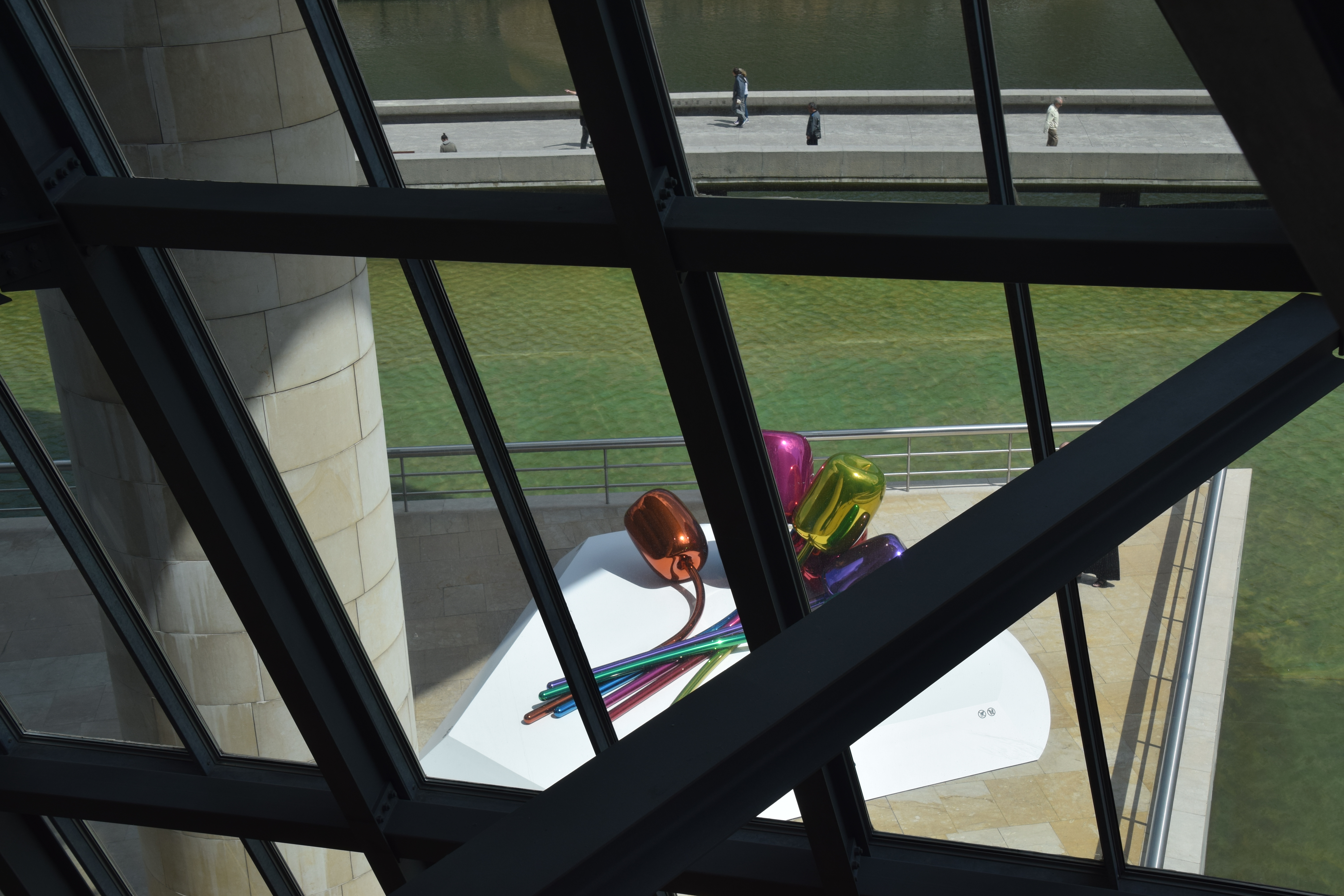
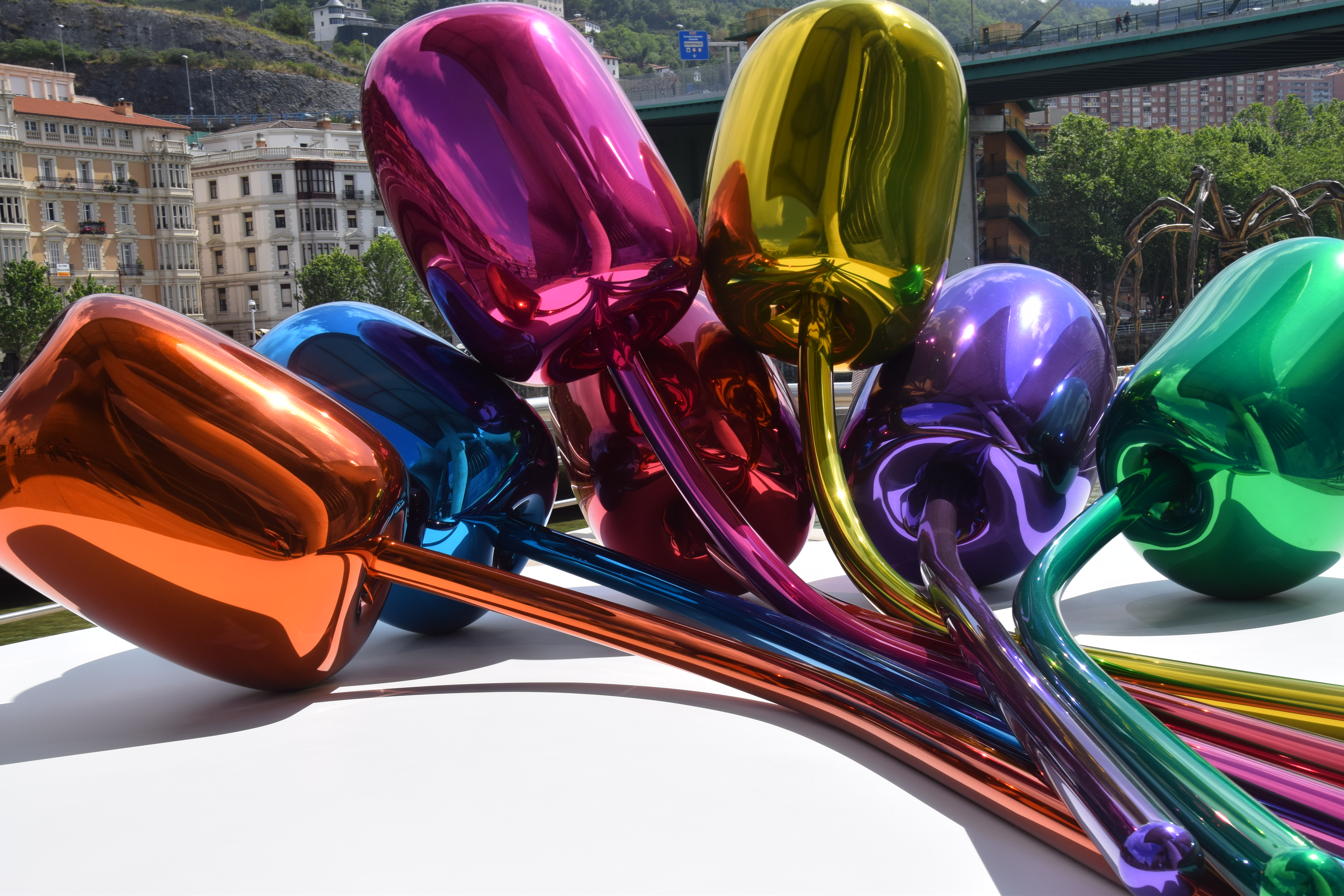
Expectations were high ~ clearly too high. This museum of modern art has surprisingly little actual art on display, though the building itself is most definitely a work of art in its own right.

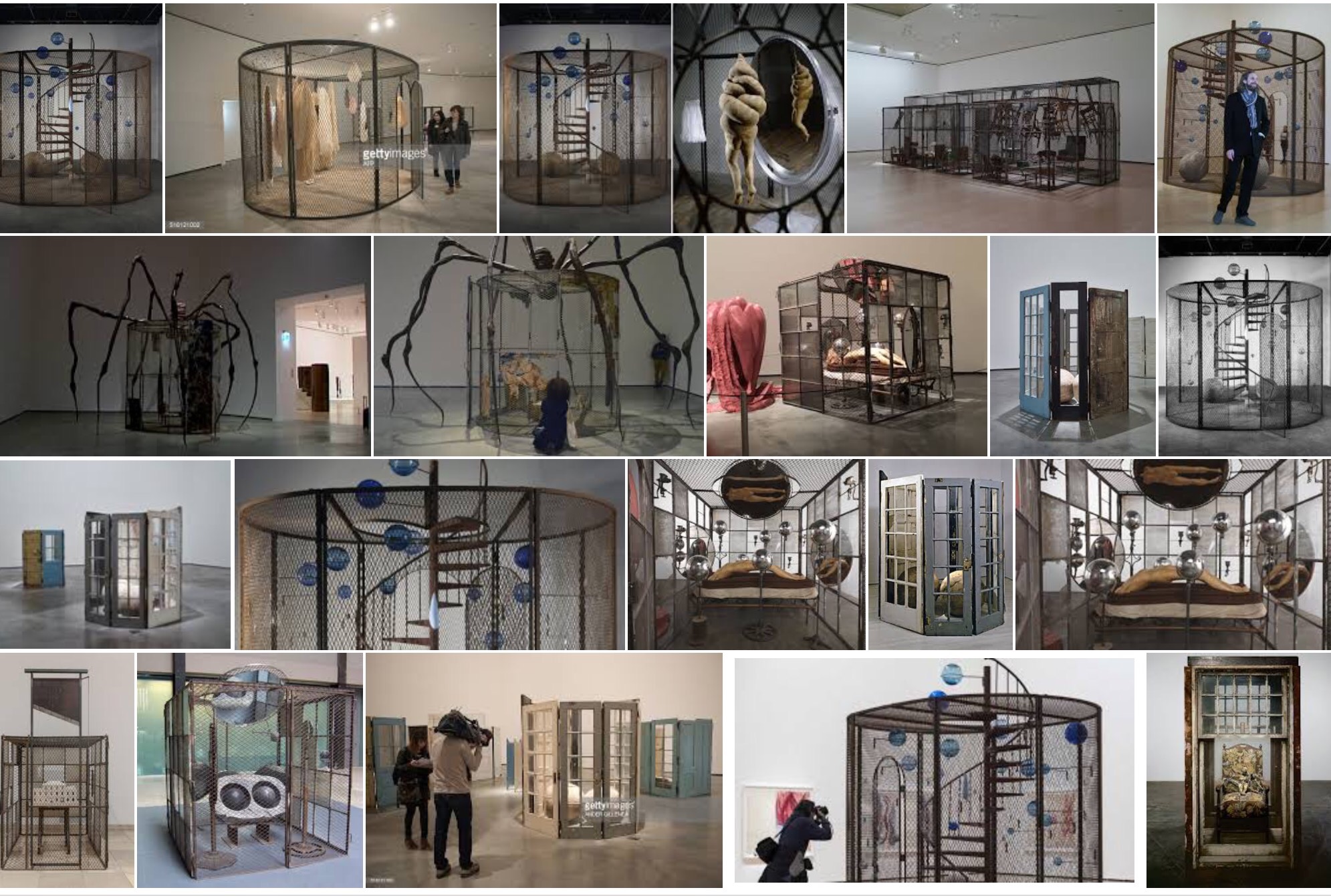
DSC_0978DSC_0976The main exhibition on display – with much breathless excitement apparent in the commentary – was room after room filled with the ‘cells’ of Louise Bourgeois – an artist who spent most of her 95 years of life re-living the terror of her childhood memories by building dozens of what are literally small rooms filled with seriously weird and warped stuff.

Far far too deep and meaningful for me… Though I’m sure Dali would have approved (and probably did).


So with two truly weird art experiences under our belt, it was with some trepidation that we set off on our one afternoon in Barcelona for the Picasso Museum, the one thing we missed off our must-see list last time we were in Barcelona.

And third time lucky it certainly was. This time the weird stuff – etchings bordering on offensive, though apparently there are even more offensive ones which were Norton display – was overtaken by the sheer beauty some of his other work, and what a prolific artist he was! I particularly loved his line drawings of bullfighting – not politically correct, I know, but I had to admire the visible movement that he managed to achieve with a few lines of black ink.

And so our Holiday in not-Spain came to an end.  We farewelled Rob, who was joining Jenna and a herd of friends for a music festival that weekend (coincidentally staying literally around the corner from our last night Barcelona hotel)!   Next stop Jordan….

Foodie heaven

The Spain that is not Spain has many attractions;  and the greatest of all is the food.  Somehow, this part of the world has encouraged, nurtured and perhaps bred a level of refined culinary exploration that may be unsurpassed globally.

So first Girona.  Amidst a plethora of tourist cafes, serving up perfectly good ham and cheese sandwiches and rolls, and moderately acceptable coffee, are many, many fabulous restaurants waiting to be discovered, if only one can stay awake long enough!

DSC_0411

Our bunch of cyclists had some difficulty falling into the Spanish habit of eating dinner at 9pm, with most actual restaurants only opening their doors at 8.30pm.

In fact, the one that took our group booking for 8 people at 8.15pm, yay, actually turned us away because they were still mopping the floors when we arrived – come back in half an hour, they said.  The boys were not happy!

Nevertheless we managed to have several great restaurant experiences, both with the cyclists and with Rob when he arrived for the second part of our three-part holiday.  I’m not going to regale you with a blow by blow account of every meal…  though the 25 course degustation at Mugaritz, with 7 extra bites at the end was surely the crowning glory – more on that at the end.

But meanwhile back in Girona, a few learnings.

Lesson 1.  The discovery that ‘gazpacho’ does not need to be made with tomatoes!  Well, I guess in classical kitchens it does, but the strawberry & cherry gazpacho I had to start a meal in a restaurant we happened on by chance was a revelation, and something I will definitely be experimenting with when summer rolls around back home.  (Turns out this is a “thing” – recipe at http://www.thelastcookie.ca/cherry-strawberry-gazpacho/)

Tart and Refreshing Gazpacho

Lesson 2.  No matter how well you think you’ve trained your staff, you can’t build a fine dining experience with people who have themselves never dined finely!  A learning from our visit to L’Alqueria, currently rated the number 2 restaurant in Girona behind the acclaimed Cellar de Can Roca (with its 12 month waiting list, and the venue for our previous ‘best ever’ eating experience).

This incredibly difficult to find restaurant down a little alleyway was finally found, our booking for 10 acknowledged and the first 7 of us shown to our table two floors up.  But where are the 3 amigos?  Turns out Don and the boys were downstairs being refused entry, while upstairs we were being roundly ignored by the two staff, who were completely flummoxed by an incomplete table.  Eventually Don used his mobile phone to call down a rescue party!

Next Peter orders some cava to start the meal, and asks for a bottle of red wine to be opened in anticipation…  waiter rushes around apparently trying to find 10 flutes for the cava, then puts out the red wine glasses, asks Peter to taste the red and shares it out between the other 9 wine glasses – failing to top Peter’s glass up, or to pour the cava at all!

And oh my, when the next bottle of red was something different… clearly he knew he was meant to bring new glasses (but no one had told him to take the old ones away).

Eventually, you could barely see the table for the array of empty glassware!  At which point, we formed a chain-gang, passing empty glasses along to Peter who was sitting close enough to an empty side table to arrange them there!  The waiters watched us clear the table without intervening.

And inexplicably, having billed themselves as a restaurant specialising in rice dishes, and indeed, with a full page of different paellas and another of risottos on the menu…  Sorry, we can only do 2 rice dishes per table.  Those who want rice have to agree on two of the many options, which can be served in as many portions as required.  Weird!  Fortunately at that point most of our table opted for something else, while Kevin, Peter and I selected two different paellas, neither if which, I have to say, were particularly spectacular.

Lesson 3.  You should always make space for the degustation menu.  Sorry Rob, we really should have had that menu at Nu… Don’t know what I was thinking!  Thankfully the waiter persuaded us to order many dishes anyway for all to share, and it has to be said, the food was spectacular, and the service outstanding.  As it turned out we did try 6 of the 11 dishes on that night’s degustation – including the interesting guacamole with lime ice cream, and the outstanding salt baked foie gras with cookies and banana ice cream.  At Nu, ice cream is not (necessarily) a dessert (maybe that should be lesson 4).  Highlight of the night, I think we all agreed, was the scallops, Iberian pork and ham parmentier.  As I write this (sitting in Jordan) I’m tempted to head out into the hills to hunt down a wild pig!

Lesson 4.  It takes leadership to effect a group decision.  At the aforementioned LLevetaps, when we finally returned after they’d finished mopping the floors, I’m slightly embarrassed (but unrepentant) to say I may have forced the whole table into the degustation menu…

(Image from restaurant website)
On the basis that we could only do it if everyone did it, and the alternative, guys, is to wade your way through this Spanish menu and decide for yourself what you’re goin to eat (and by the way, if we take the matched wine options, we don’t even need to worry about what we’re going to drink either).  Billed as the best tapas restaurant in Girona, they did not disappoint, with amazing food and the equivalent of the “bottomless pot” when it came to the matched wines.  Highlights of the 8 course meal – the octopus?  the pork? the amazing lemon verbena dessert…  Too hard, I’ll let you peruse the menu and decide, though for me the octopus was a revelation – giant rounds of tentacle, akin to pork fillet, perfectly cooked with a richness of flavour that trumped all else.

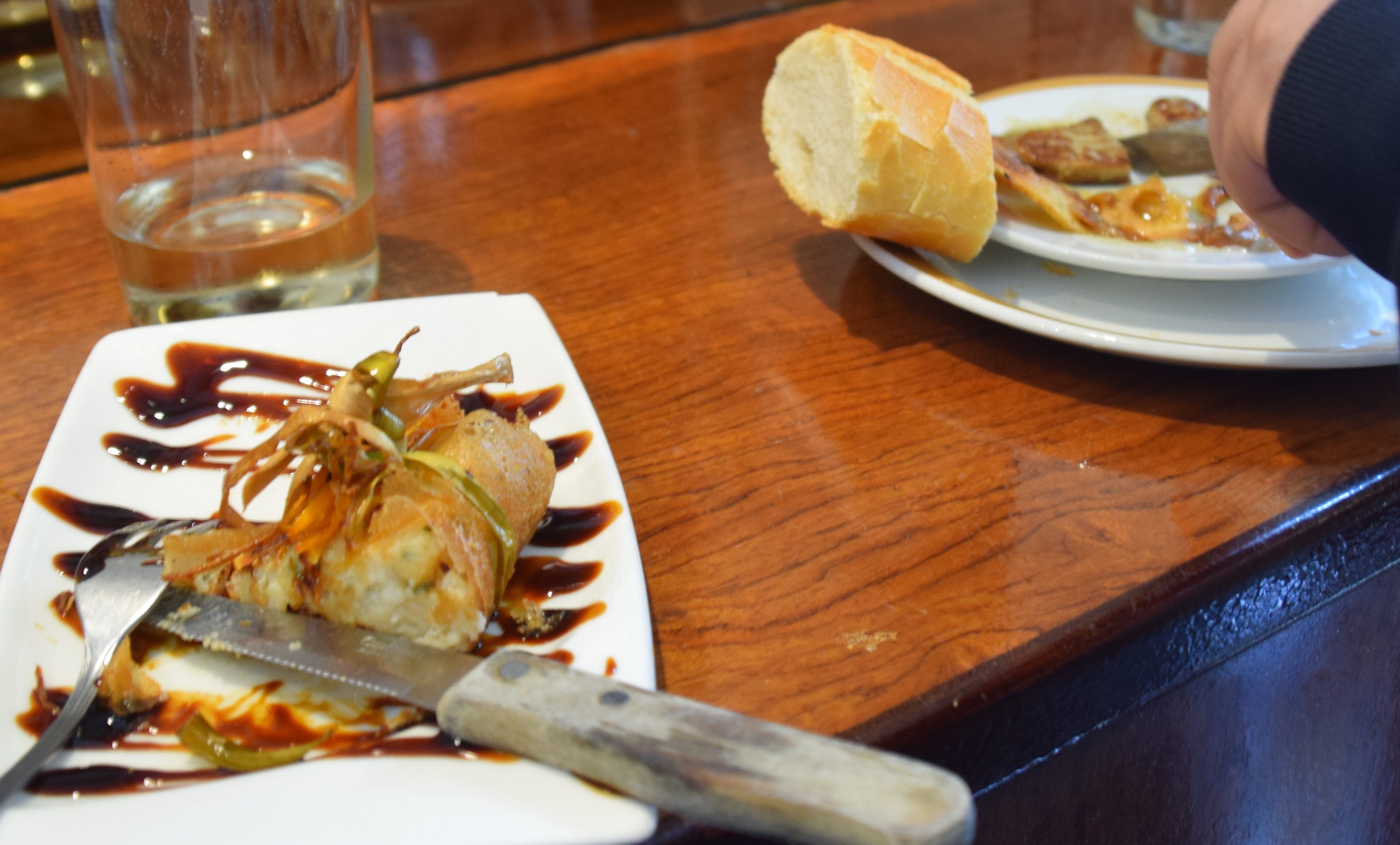
And so to San Sebastián, with its amazing pintxos, its ancient cidery where we literally pigged out on a set end with a truly giant T-bone steak as one of several full meals on a plate all seven in succession, with encouragement to visit the barrel room frequently for a refill of cider – every barrel different, try them all!  (Not that we did!)

Mugaritz was, as I said, the crowing glory – the primary purpose of our 600km road trip across the top of Spain.  A half-hour taxi ride up into the hills delivered us to an airy room, minimally decorated tables set with white cloths and an artfully arranged broken white plate on each.  They checked (again) whether we had any food ‘issues’ … ‘Only one’, said Peter, ‘we don’t like bad food’.

Unlike our last “top restaurants of the world” adventure to Osteria Francescana in Modena, which was positively snooty, Mugaritz was friendly, welcoming – ‘we want you to have fun with the food’, out waiter encouraging us to eat with our fingers – cutlery only provided when absolutely necessary.

Over the next 3 1/2 hours, 25 small bites followed, each perfectly presented, almost too beautiful to eat.  Some were amazing, some interesting, and only one really weird – the final dessert course of a tiny Michelin Man marshmallow, which was deliciously light, floating in a white broth described as “oxidised wine” which was frankly an assault on the taste buds.  Top picks were hard to agree on…  For me, the scallops with veal tendon and lemon – the tendon thinly stretched over the scallop in its shell, adding riches which was beautifully cut by the lemon dressing.  I was pleased there were two each!  The roast garlic which concentrated lamb broth – lamb’y garlic rather than garlicky lamb was amazing…

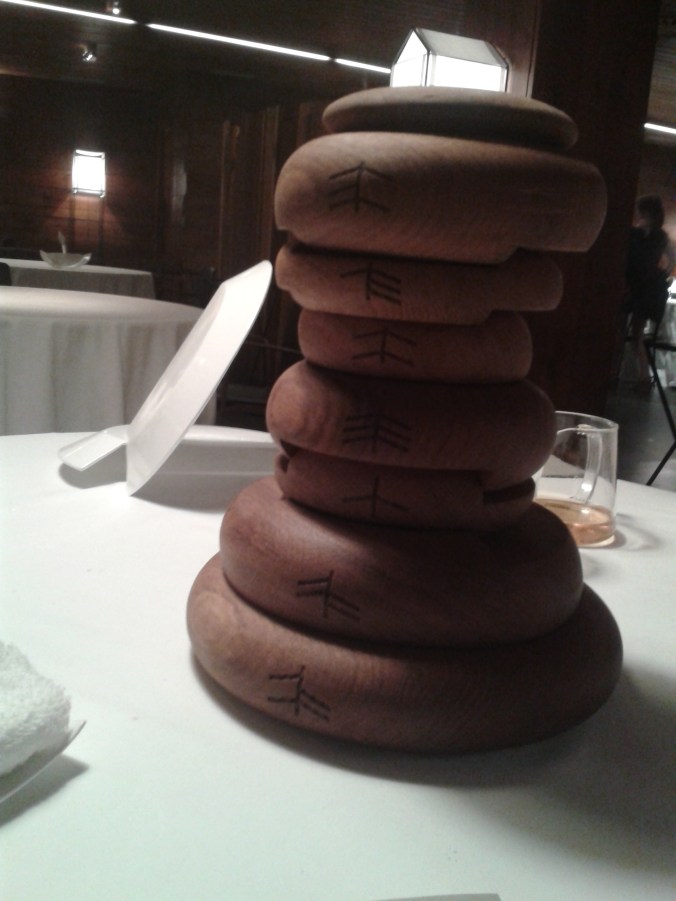
And just when we thought it was over, the tower of the seven deadly sins arrived on the table.  Taking off the first lid, we found pride – three hollow shells of gold plated chocolate, followed by envy – one choc only, leaving the rest envious, and so it continued.

Seven Deadly Sins Tower

It was also fascinating to watch the other tables having not quite the same things – perhaps they had specified food foibles – and to visit the kitchen to see the lists for each table being efficiently crossed off as courses were delivered one by one.  A truly extravagant indulgence, a real foodie experience, and yes, we definitely had fun!  Even the slightly hair raising ride back down to the coast in a taxi with limited braking function was part of the adventure!

A week later, as I faced yet another blander than bland meal of “Jordanian specialty”, I thought it was probably just as well that we ended our holiday with lots of exercise and less tempting food.  After all, life’s all about balance – and I can’t wait to start experimenting with more not-Spanish flavours when we get home!

You’re not in Spain now!

What has been billed in my mind throughout the planning process as “our trip to Spain” turns out to not have been to Spain at all.

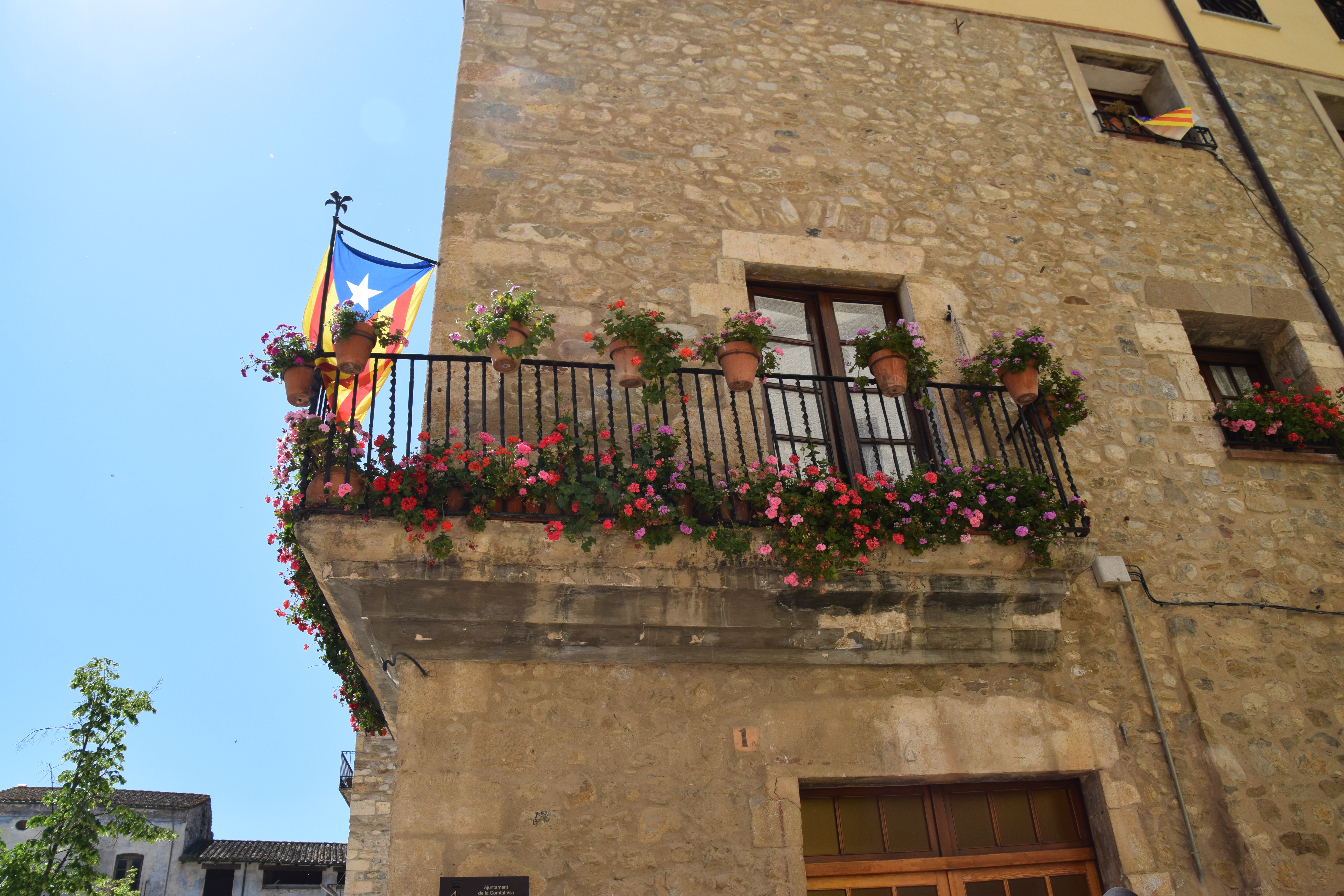
While not overt, it was clear in our first two weeks in Catalonia that this is a region, and a people, in the midst of a ‘self-determination’ debate.  The Catalonian flag of independence flew from every other balcony, though interestingly, not always in exactly the same colour.

DSC_0548

Our questions about the differences between the red star vs the blue starred ones were mostly met with shrugs – reminiscent of that inimitable French shrug with which I am so familiar. The anti-independence cafe owner we asked about it, somewhat disparagingly explained that the ‘official’ flag of Catalonia is the striped red and yellow one – apparently created by a French general at some stage in the past when the Catalonyan armies came to his rescue, and lost their leader in the process.  It is said he dipped his fingers in the Catalonyan blood and drew the four red stripes across a golden shield.  This is the official flag of Catalonia, a province of Spain.

But in a quite recent unauthorised referendum, supported by the provincial politicians, but not endorsed by the Spanish government, the population apparently voted to secede… with the forces for independence apparently agreeing on their new flag construct – a triangle with a star superimposed on the stripes, but not on its colour.  All this reminding me of the ridiculous flag referendum in NZ where two of the choices were simply different colours of the same design, which split the vote, and arguably resulted in the old flag being retained for now.

But I digress…

So Catalonia remains very much part of Spain for now – apparently, according to a tour guide we spoke to, having rejected the halfway house of devolved government in a semi-federal arrangement as has been implemented in other northern provinces.  The Catalonian language is visible in the bilingual signage, and I guess audible for those with an ear for these things.  But it was, as I said, not overt… maybe there are so many tourists from the rest of Spain that it’s all blending in….

In contrast, heading west through the Pyrenees to Basque Country, the divide became much clearer.  Bilingual street signs gave way to separate signs – sometimes one on each side of the road, leading to massive confusion for map readers… and reflecting what we discovered to be an aggressively separate-from-Spain people and culture.  Human remains discovered recently date the Basque people to being in the region more than 5000 years ago, with evidence of their seafaring forebears having reached the ‘new world’ across the Atlantic, along with the Vikings, centuries before Columbus.

In San Sebastián, the language of choice is Uscera, a language completely unrecognisable from Spanish, since it predates Latin.  With roots apparently in Ethiopia, it is one of the oldest languages still in use on the planet (though Rob informs me, courtesy of Dr Google, that the actual oldest language in Europe is actually Lithuanian).  In the Basque region, schools use Usecera as the mother-tongue.  As the kids get to 7 or 8 years, we were told, they start doing one day a week in English.  Eventually Spanish is introduced, but only for a couple of hours a week.  An interesting message, there.

We did a fascinating tour with a retired US serviceman, married into a Basque family.  A couple of hours trawling an edited history of the region, including the impact of Franco – most visible in the one ugly building blotting the skyline…  Looks like a prison, said one of our fellow tourists, mirroring my thought that it looked like John Foster Square (police HQ) in Johannesburg!  But no, apparently it’s residential – “just like Soviet Russia” said another.

DSC_0962

Keith, our guide, regaled us with tales of the past and the present… Franco, he said, was on a mission to “make Spain great again”.  I really wanted to ask if, as a US citizen, he was concerned about the parallels with Trump’s rhetoric, but in the interests of group harmony, I refrained (out fellow groupees being “official barbecue judges” from Kentucky – I kid you not!).  He talked about ETA, and the parallels with the IRA …  I wondered if Keith himself might be what is euphemistically called a “government employee”?  This tour guide gig would be the perfect cover, and he talked at length about doing drug-enforcement duties in South America…  Another thought I kept to myself.

According to Keith, and indeed similar to what our grumpy Girona cafe owner had said, a lot of the tension is economic.  Here in the north, people work (well, not that hard – see later comments) but they do work.  The people in the south are lazy (or appear to be, it’s often 40 degrees in the shade after all) and the money from the north goes to fund the less-productive (shall we say) people in the south.

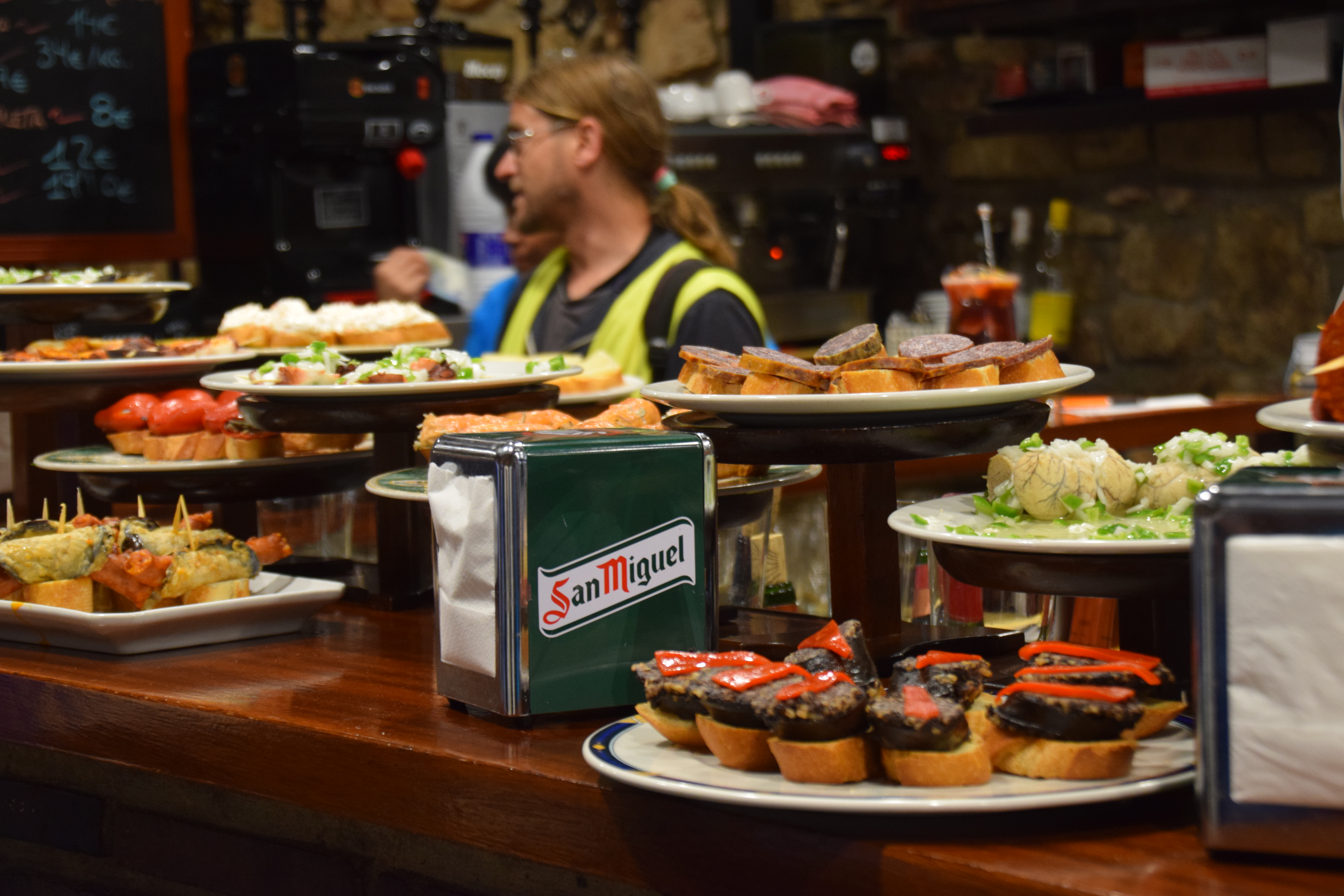
Mind you, Keith did go on to explain that the average working person doesn’t actually work all that much either.  Explaining how pintxos (Basque tapas) works, and how to eat like a local, he told us that a typical working day starts at 10am (after you’ve walked the dog – everyone seems to have a dog, despite living in tiny apartments – had your swim in the sea, and picked up a coffee and a pastry, to get you through till morning tea time, at about 11.45am, when you pop out for your first pintxos and a glass of wine or cider.

DSC_0953

Then it’s back to work for an hour or two, while you make plans to meet your friends for lunch.  Around 1.45pm you might meet some friends in a pintxos bar, for one or two drinks and bites to eat in anticipation of your menu of the day, three course lunch which starts around 2pm, with half a bottle of wine per person included (though it has to be said, if you are a real wine drinker, you will want to select – and pay for – your wine separately rather than drink the Ribena-like stuff included in the menu price!).  Around 4pm you will return to work until about 8pm – this is when any ‘real’ work gets done, though one has to wonder about the possibility of doing your best work on what could easily by now be your first bottle of wine for the day!  And that also explains why restaurants don’t open until 8.30pm in the main…  People are at work!

DSC_0941

If one is to believe Keith, most people don’t take work all the seriously anyway – they’re just working to get through to the retirement cheque, when they can spend their days at the beach or the park, eating and drinking on the government.  The fact that these cheques come from Madrid – central government – is a significant deterrent to the population voting to completely break away from Spain.

The second part of what turned out to be a nearly 6 hour tour was basically a pub crawl – visiting 5 different traditional pintxos bars, for a carefully well-matched drink and “snack” at each…  foodie heaven!  Showing us how to eat like a local – claim your ‘real estate’ when you walk in (a patch of counter or bar space – these are stand-up eating experiences);   don’t take a plate or cutlery (unless what you’re eating really needs it), especially don’t treat the array of food like a buffet!

DSC_0944

We quickly started ‘judging’ people with a large plate, loading up, as being seriously culturally unaware!  Lean forward and bite… The lean needs to be far enough that any drips fall on the floor, not your front – and then drop your toothpick and napkin on the floor to follow.  Don’t have more than one, or maybe two if you must, at any place before moving on to the next.  You can tell where the locals eat – the floor is covered in napkins and debris, and the place is empty by about 2.30pm when they head onwards to their real lunch.

DSC_0943

Apparently on the weekend, the process repeats – only at a much more leisurely pace, and in much larger groups, as whole families roam the streets grazing on this and that before somehow miraculously agreeing on where to lunch.  Keith talked about his Basque family of maybe 15 or 16 people visiting 3 or 4 pintxos bars on the way to lunch… Kids, oldies all in tow!  Having experienced first hand the difficulty of getting a small group of cyclists to agree where to eat, I marvelled at the fact that 16 people could visit not one, but 4 or 5 bars and restaurants in a single day, and apparently all hang together doing so.

They then stay out -kids and all – often until the early hours of the morning, socialising, snacking…  ‘Back home’, said Keith, ‘I’d get a visit from child protection services’, but here the kids are included in everything.  Especially, it seems, the eating and drinking that is so very much part of this amazing part of the world.

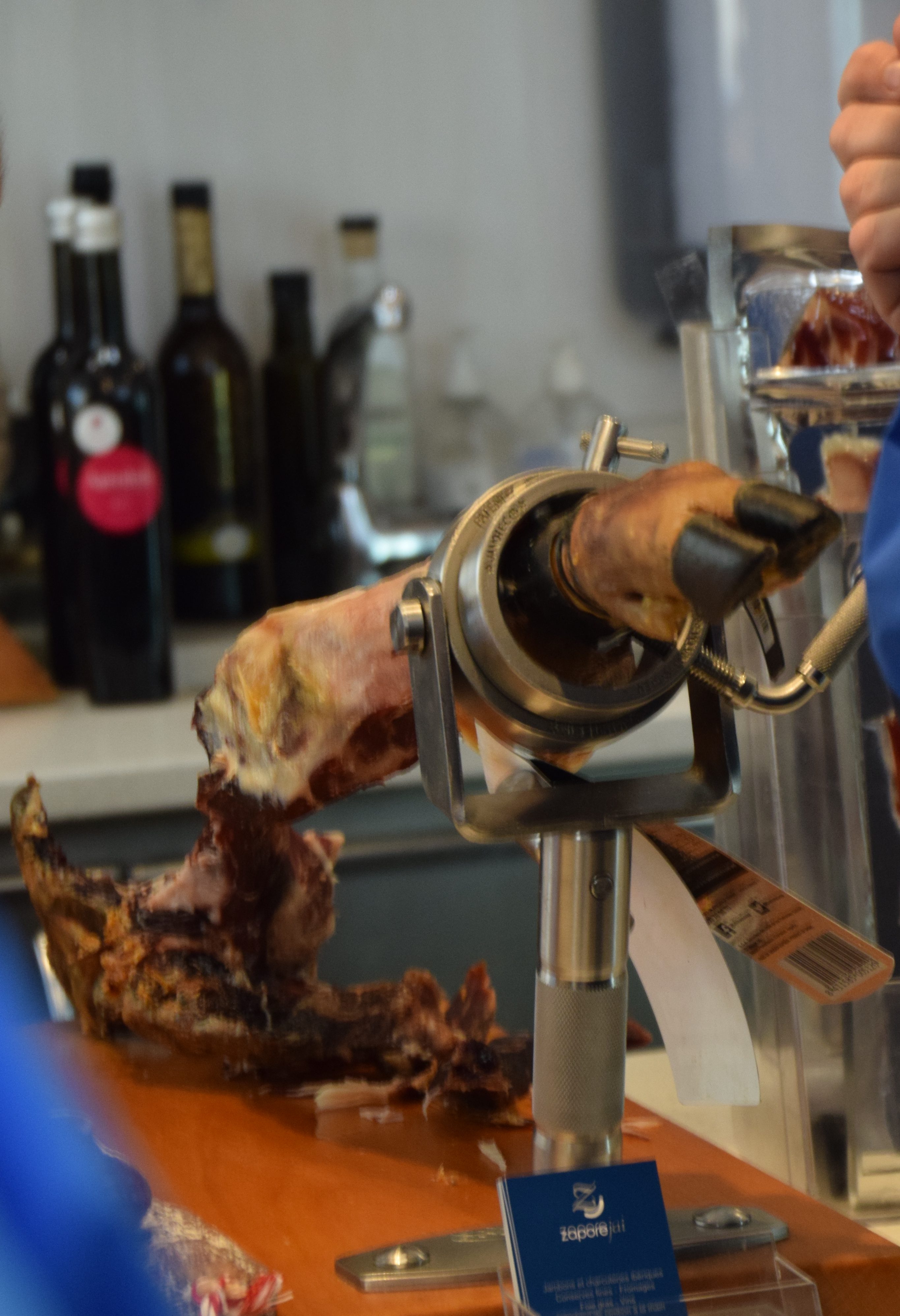
If there is a single item of food that I wish I could smuggle back home, it would be a large hind leg ham of black-hoofed Iberian pig – a taste beyond description, sold on the streets as a paper cone filled with ham slices – heaven!

DSC_0952

Instead, I’m bringing back a pintxos recipe book, planning that pintxos party in the not too distant future.

And determined to henceforth refer to this holiday as the one when we were not in Spain!